 How-to
Why Do Restoration Quotes Vary So Much?
Last Updated: November 12, 2026
Quick Summary
Restoration quotes vary because contractors are not measuring the same thing: each quote defines the scope of work differently, and one bid may cover tear-out and drying while another stops at drying and leaves the rebuild for later. Differences in quantity takeoffs, unit pricing, and inclusions explain most of the gap between two line-item totals.
- Water damage restoration costs range from $450 to $16,000, with a national average of $3,874 in 2026.
- A complete quote should list scope of work, line-item breakdown, equipment charges, exclusions, and hidden-damage terms.
- Compare bids in the same format with the same line items, units, and inclusions, then compare totals.
- A blank row in one bid is a scope gap, not a savings.
- A bid far below the adjuster's scope may exclude work the carrier already agreed to pay for.
Table of Contents
- Why Restoration Quotes Vary So Much for the Same Damage
- What Should a Restoration Quote Include?
- How to Compare Restoration Estimates Without Getting Fooled
- An Itemized Restoration Estimate Example, Line by Line
- Insurance Estimates, Adjusters, and Change-Order Controls
- How the Restoration Project Timeline Shapes the Final Cost
- Request a Line-Item Quote From Mint Restoration
- Frequently Asked Questions
Why Restoration Quotes Vary So Much for the Same Damage
Water damage restoration costs in the U.S. range from $450 to $16,000, with a national average of $3,874 in 2026, according to Angi's water damage restoration cost data. That spread is enormous. And it explains the question we hear most at Mint Restoration: why did three contractors hand me three very different numbers for the same flooded room?
The short answer is that restoration quotes are not measuring the same thing. A restoration quote is a written estimate of the labor, materials, equipment, and services needed to return a damaged property to its pre-loss condition, and no two contractors define that scope the same way. One bid may cover tear-out and drying. Another may stop at drying and leave the rebuild for later.
Below, we break down the real drivers behind the gap, show you how to compare bids line by line, and explain how to spot a low bid that will cost you more later.
What Should a Restoration Quote Include?
A complete restoration quote should list the scope of work, a line-item breakdown of labor and materials, equipment charges, exclusions, and a clear statement of what happens if hidden damage turns up. If any of those are missing, you are not comparing quotes. You are comparing guesses.
Scope of Work and Damage Assessment
The scope of work is the single biggest reason bids diverge. Two contractors can walk the same water-damaged hallway and see different jobs.
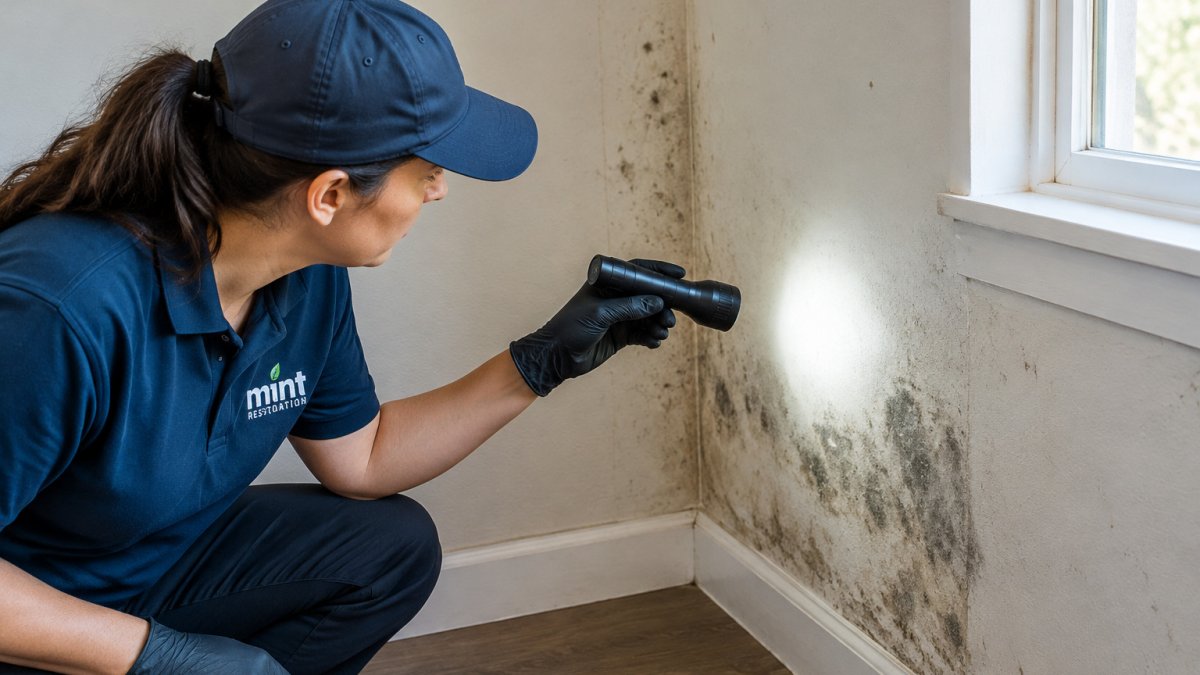
One inspects with moisture meters and thermal imaging and finds saturated drywall behind the baseboard. The other eyeballs it and writes "dry and paint." The first quote is higher because the job is bigger.
A common mistake is choosing the cheaper bid without checking whether it includes:
- Demolition and debris disposal
- Equipment rental for drying
- Antimicrobial treatment
- Reconstruction after mitigation
Exclusions, Assumptions, and Contingency
Every quote should say what it does not cover. Look for a provisional sum or contingency line for unforeseen work, plus a written change-order process. Without those, a low bid can quietly grow once walls open up.
How to Compare Restoration Estimates Without Getting Fooled
To compare restoration estimates fairly, put every bid into the same format: same line items, same units, same inclusions. Then compare totals, not headlines. Apples-to-apples comparison is the only way to see a quote discrepancy for what it is.

Use this checklist on every bid:
- Scope of work written in plain language
- Line-item breakdown with quantities and units
- Materials and finish selections named by brand or grade
- Equipment and drying days listed separately
- Exclusions and assumptions stated
- Contingency or provisional sum included
- Change-order process in writing
- Permits and inspections addressed
- Proof of license, insurance, and bonding
Before you sign anything, confirm the contractor's credentials. Our guide on how to verify restoration contractor credentials walks through license checks, insurance certificates, and certification lookups. If you are still narrowing the field, how to choose a restoration contractor gives you a seven-step vetting framework.
An Itemized Restoration Estimate Example, Line by Line
A line-item estimate is only useful if the units are specific enough to compare. "Drywall, lump sum" tells you nothing. "Drywall, 240 square feet, 1/2-inch, level 4 finish, prime and paint" tells you exactly what you are buying and what another bidder left out. The table below shows the line structure most restoration estimators use, the unit each line should carry, and the specific question to ask when comparing two bids side by side. The figures are illustrative placeholders, not a quote from us.
| Line Item | Typical Unit | What to Verify in Each Bid |
|---|---|---|
| Emergency response and board-up | Hours or each | After-hours rate, response window, and whether board-up materials are included |
| Water extraction | Square feet or cubic feet | Equipment type (portable vs. truck-mount), number of passes, and whether extraction is billed per visit |
| Structural drying | Days, with equipment count | Number of air movers and dehumidifiers, daily equipment rate, and who pays if drying runs past the estimate |
| Moisture monitoring | Each visit | Whether daily or every-other-day readings are included and documented for the insurer |
| Demolition and tear-out | Square feet | Whether debris hauling, dumpster rental, and disposal fees are separate lines |
| Antimicrobial application | Square feet | Product name, coverage rate, and whether a second application is included |
| Content manipulation and storage | Hours or cubic feet | Pack-out, storage, and pack-back priced separately or bundled |
| Drywall replacement | Square feet | Thickness, finish level, and whether prime and paint are included |
| Flooring replacement | Square feet | Product allowance stated in dollars per square foot, plus removal and disposal |
| Trim, doors, and cabinetry | Linear feet or each | Whether match-to-existing is assumed and who absorbs the difference |
| Permits and inspections | Each | Who pulls the permit and whether inspection fees are reimbursable |
| Project management | Percent of job or flat | What the percentage covers and whether it duplicates other lines |
| Contingency or provisional sum | Percent or dollar amount | Written change-order terms and who approves added work |
Three mechanics explain most of the gap between two line-item totals. First, quantity takeoffs: one estimator measures the affected area at 180 square feet and another at 260 because they disagree on where the damage stops. Second, unit pricing: drying equipment billed at a daily rate for five days versus a flat weekly rate can swing a mitigation line by hundreds of dollars. Third, inclusions: a flooring line that names a $4.00-per-square-foot allowance and one that says "install flooring" are not the same bid, even if the totals look close.
Watch out: a bid that shows a single lump sum for mitigation and a single lump sum for reconstruction cannot be compared line by line, and asking for a breakdown after you sign rarely produces one. Request the itemized version before you choose.
To use the table, copy each line into a spreadsheet with a column per contractor, then compare quantity, unit price, and inclusion status row by row. Any row where one bid is blank is a scope gap, not a savings. Our guide on how to verify restoration contractor credentials covers the license, insurance, and certification checks to run before you accept any line-item bid.
Insurance Estimates, Adjusters, and Change-Order Controls
When insurance is paying, the quote you receive is not the only number in play. There are usually three: the contractor's estimate, the adjuster's scope of covered damage, and the amount the policy actually pays after your deductible. Quote variation in an insurance job often reflects how well a contractor's estimate maps to the adjuster's scope, not how much the work costs.
Ask each contractor these questions before you compare totals:
- Will you document the loss with photos, moisture readings, and a room-by-room sketch that the adjuster can use?
- Will you estimate in the same line-item format the carrier uses, so scope differences are visible?
- Will you communicate directly with the adjuster, and will you prepare a supplement if hidden damage is found after demolition?
- How do you handle the gap between the adjuster's approved scope and your estimate, do you bill the homeowner for it, or pursue it as a supplement?
- Is your deductible reflected in the numbers you are showing me?
A supplement is a formal request to the carrier for additional covered work discovered after the initial scope, such as wet framing behind drywall that was not visible on the first inspection. Contractors who routinely write supplements tend to produce estimates that hold up, because the initial scope is realistic rather than trimmed to match an approved number. A bid that comes in far below the adjuster's scope is worth questioning: it may exclude work the carrier already agreed to pay for.
Change-order controls matter just as much on an insurance job, because added work needs both your approval and, often, the carrier's. A written change order should state the added work, the added cost, whether it is being submitted as a supplement, and your signature before work continues. No signature and no supplement request means the added cost can land on you.
Mint Restoration is a fully licensed, insured, and bonded general contractor, and we handle mold, asbestos, and meth remediation, so you are not juggling multiple contractors. If you are still narrowing the field, how to choose a restoration contractor gives you a seven-step vetting framework that includes insurance coordination questions to ask each bidder.
How the Restoration Project Timeline Shapes the Final Cost
Time is money in restoration, literally. Every extra drying day adds equipment charges. Every delay in approvals pushes labor costs higher. That is why two quotes for the same damage can differ based on schedule alone.
A contractor who can start within hours limits secondary damage. A contractor booked out two weeks may arrive to find mold that was not there before. The restoration project timeline drives the final cost as much as the scope does.
For a full walkthrough of scheduling and duration, see our guide on how long restoration takes. It covers mitigation, drying, reconstruction, and what typically causes delays.
Request a Line-Item Quote From Mint Restoration
The fastest way to end quote confusion is to get one bid you can actually read. Visit Mint Restoration's website or contact us for a quote and current pricing.
Mint Restoration brings over 30 years of experience, 60-minute on-site response, and 24/7 availability including holidays. Every project is backed by a one-year warranty on all work. If you are facing fire or smoke damage, our fire and smoke damage repair service team can assess the loss and provide a quote.
Stop guessing which bid is real. Get a line-item quote from Mint Restoration and see exactly what your restoration covers, from mitigation through final walkthrough.
Frequently Asked Questions
Why do restoration quotes vary so much for the same damage?
Most of the gap comes from differences in scope, not greed. One contractor may price demolition, debris disposal, and hidden-damage allowances; another may list only visible repairs. Materials and finish grades, crew experience, permits and inspections, overhead, and profit margin all move the number too. Ask each contractor for an itemized scope so you compare the same work.
What should a restoration quote include to be comparable?
A quote you can compare should list the scope of work room by room, demolition and debris disposal, materials and finish selections with product allowances, labor and crew makeup, equipment like drying units and air scrubbers, permits and inspections, and a project timeline. It should also state exclusions, assumptions, and how change orders are handled. If a bid skips those sections, ask for them in writing before you compare restoration estimates side by side.
Can a restoration contractor change a quote after work begins?
Yes, through a change order, and that is normal when hidden damage turns up behind drywall or under flooring. What matters is the control process. A fixed-price quote limits surprises on known work, while provisional sums and allowances cover items nobody can price until demolition. Ask upfront how change orders are priced, who approves them, and whether you get written notice before extra work starts. That single question separates a controlled project from an open-ended bill.
Why might a low restoration quote cost more in the end?
A low bid often leaves work out: no antimicrobial treatment, no moisture mapping, no permit fees, or no allowance for hidden damage. Those gaps return as change orders once the walls are open. Cheap labor and low-grade materials can also fail early, which is why a written workmanship warranty matters. Compare itemized line items, not totals, and check licensing, insurance, and certifications before you sign.