 listicle
How to Choose a Restoration Contractor: 7 Vetting Steps
Table of Contents
- 1. Start With Licensing, Bonding, and Insurance Verification
- 2. Use a Restoration Contractor Checklist to Compare Candidates Side by Side
- 3. Questions to Ask a Restoration Contractor Before You Sign
- 4. Restoration Contractor Red Flags That Should End the Conversation
- 5. How to Compare Estimates, Scopes of Work, and Contract Terms
- 6. How Long Does Restoration Take, and What Milestones Should You Track?
- 7. Matching the Contractor to Your Damage Type and Property
- Conclusion: Make the Decision Before the Emergency Hits
- Frequently Asked Questions
Last Updated: October 14, 2026
1. Start With Licensing, Bonding, and Insurance Verification
Choosing a restoration contractor starts with one non-negotiable step: verify the license, bond, and insurance before anyone touches your property. In most states, a general contractor license is issued and tracked by a state licensing board, and you can confirm a contractor's status through that board's public lookup. If a company cannot produce a license number, that is your answer.
A licensed contractor holds the credential your state requires for the work being performed. A bonded contractor carries a surety bond, which gives you a financial backstop if the company fails to meet its obligations. An insured contractor carries general liability coverage and workers' compensation, which protects you if a worker is injured or your property is damaged during the job.
Ask for the certificate of insurance directly, then call the insurer to confirm the policy is active. Certificates can be edited; a five-minute call to the carrier cannot. state contractor license lookup guidance explains how licensing requirements vary by state.
2. Use a Restoration Contractor Checklist to Compare Candidates Side by Side
A restoration contractor checklist turns a stressful decision into a scored comparison. Instead of relying on memory after three different sales pitches, you rate every candidate on the same criteria and let the totals decide.
Here is the scorecard we would use. Rate each contractor 1-5 on every line, then add the totals.
| Criteria | What to Verify | Score (1-5) |
|---|---|---|
| Licensing and bonding | Active state license, bond on file | |
| Insurance | Liability + workers' comp confirmed with carrier | |
| Certifications | IICRC, RIA, or ASCR trained technicians | |
| Relevant experience | Completed jobs matching your damage type | |
| Emergency response | Stated response time, 24/7 availability | |
| Written estimate | Itemized scope of work provided | |
| Communication | Named point of contact, update schedule | |
| Warranty | Written warranty terms and duration |
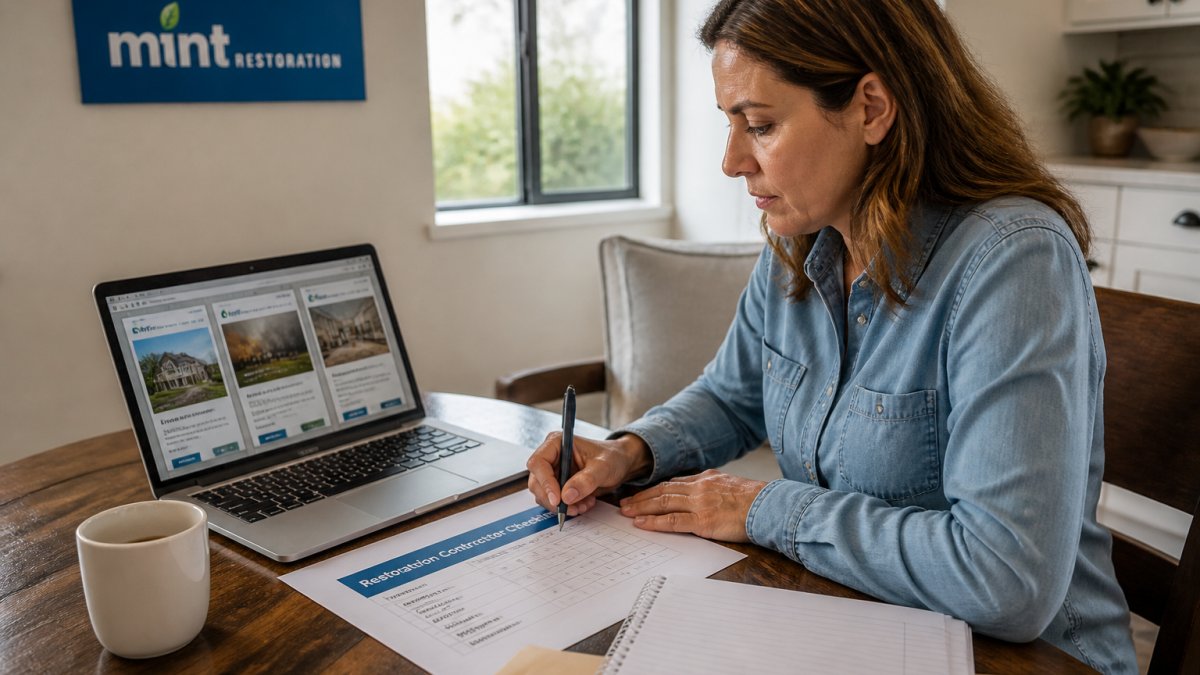
Any contractor scoring below 30 out of 40 should be removed from consideration, no matter how friendly the sales visit felt.
3. Questions to Ask a Restoration Contractor Before You Sign
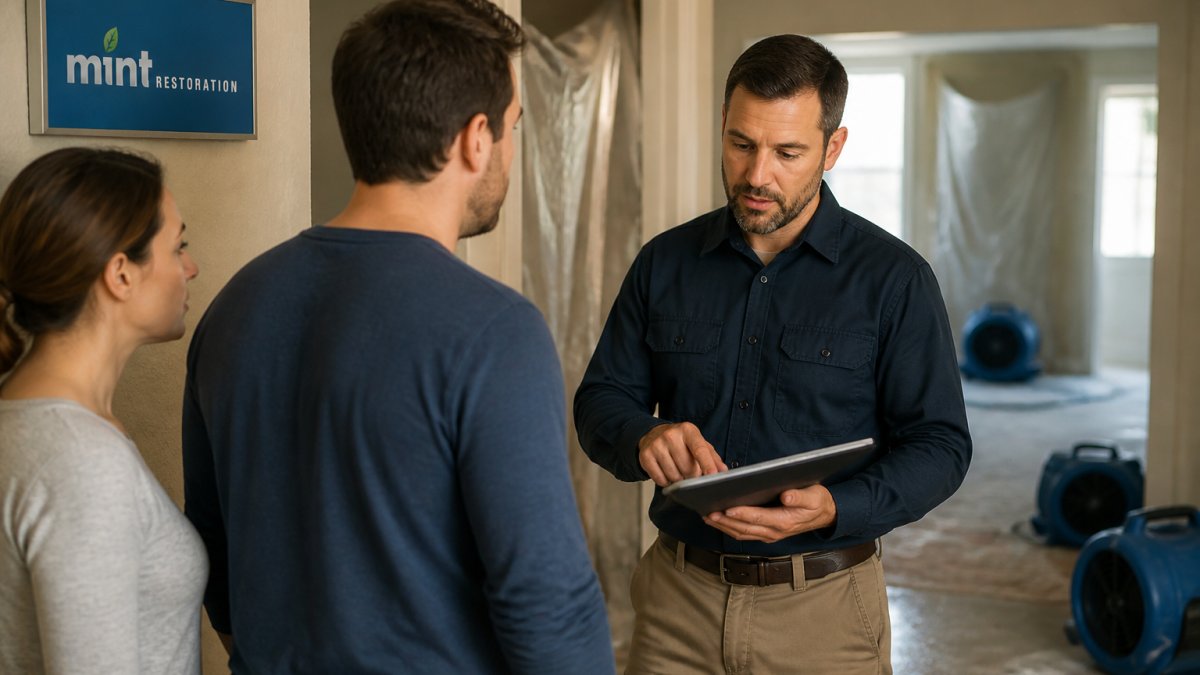
The right questions to ask a restoration contractor fall into two groups: how they handle your insurance claim, and whether they actually have the scope, equipment, and staffing to finish the job. Ask both sets before signing anything.
Insurance Coordination Questions
- Will you communicate directly with my insurance carrier and adjuster?
- Do you document the damage in a format the adjuster accepts?
- Can you explain what my policy likely covers before I file?
- Do you bill the carrier directly, or will I pay upfront and seek reimbursement?
A contractor who works with carriers regularly will answer these without hesitation. One who deflects them is likely to leave you in the middle of the paperwork.
Scope, Equipment, and Staffing Questions
- Do you handle both mitigation and reconstruction, or will I need a second contractor?
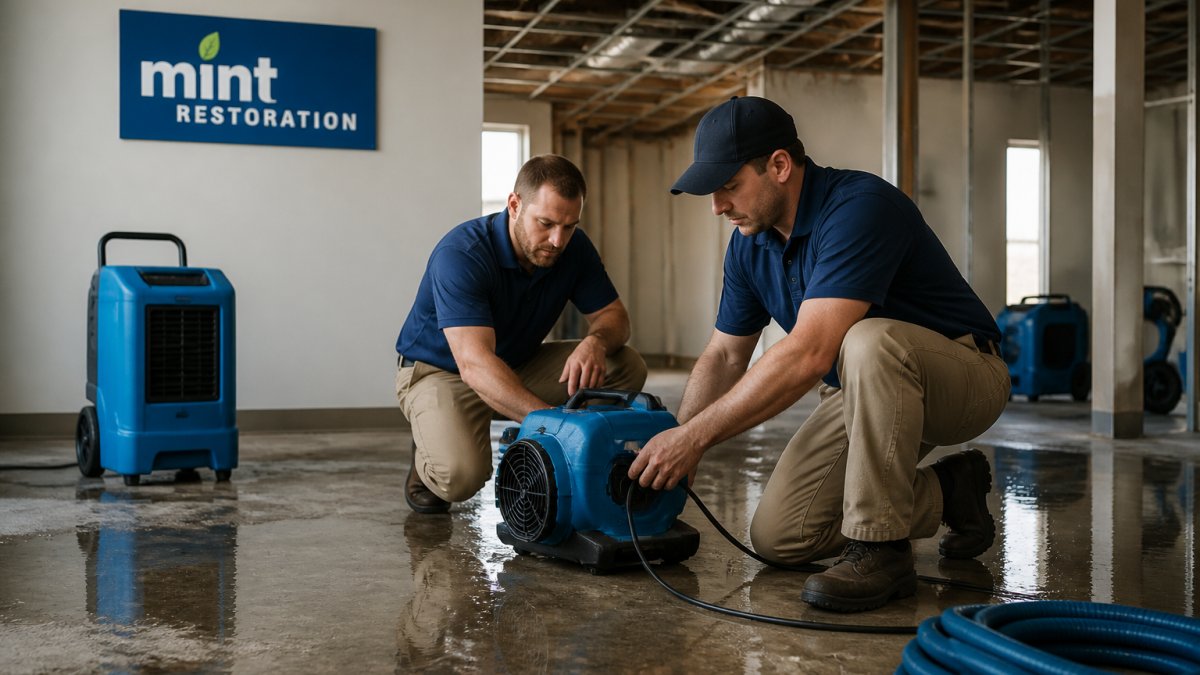
- What drying equipment will you bring, and how do you track moisture readings?
- How many crews do you have, and how soon can they start?
- Who is my single point of contact for the whole project?
The mitigation-versus-reconstruction split matters more than most homeowners expect. Companies that stop at drying and demolition leave you hunting for a general contractor mid-project.
4. Restoration Contractor Red Flags That Should End the Conversation
Restoration contractor red flags share a common thread: pressure. The companies worth hiring let you verify, compare, and think. The ones that do not are usually the ones you should avoid.
Watch for these:
- Door-to-door solicitation immediately after a storm, especially from out-of-state crews.
- Large upfront payment demands, particularly cash, before any work begins.
- An estimate far below every other bid, which usually means a vague scope that grows later.
- No written contract, or a contract with blank line items.
- No physical business address or a phone number that only rings to a call center.
- Pressure to sign on the spot with a "today only" discount.
5. How to Compare Estimates, Scopes of Work, and Contract Terms
Comparing estimates means comparing scopes, not totals. A written estimate with a lower bottom line often covers less work, and the gap shows up later as change orders. Ask every contractor for an itemized estimate that lists labor, materials, equipment, and disposal separately.
Line-by-Line Estimate Comparison
Put the estimates side by side and check four things:
- Scope of work - Does each bid cover the same rooms, materials, and finishes?
- Mitigation vs. reconstruction - Is rebuilding included, or only tear-out and drying?
- Exclusions - What does each contractor explicitly leave out?
- Contract terms - Payment schedule, warranty length, and dispute process.
For contract terms, the FTC guidance on home improvement contracts is a useful reference on what a written agreement should contain, including the three-day cooling-off rule for contracts signed at your home.
6. How Long Does Restoration Take, and What Milestones Should You Track?
Most residential restoration projects run from a few days for minor water damage to several weeks or months when reconstruction is involved. The honest answer to how long does restoration take is that the timeline depends on the damage type, the size of the affected area, and how quickly your insurance claim is approved.
Track these milestones instead of a single completion date:
- Damage assessment and documentation completed and shared with your adjuster
- Mitigation started, meaning water extraction or board-up is underway
- Drying complete, verified by moisture readings rather than by feel
- Scope of work approved by you and your carrier
- Reconstruction started with a crew on site
- Final walkthrough completed before final payment
Ask for written status updates at each milestone. A contractor who cannot tell you where your project stands is a contractor who is not tracking it.
7. Matching the Contractor to Your Damage Type and Property
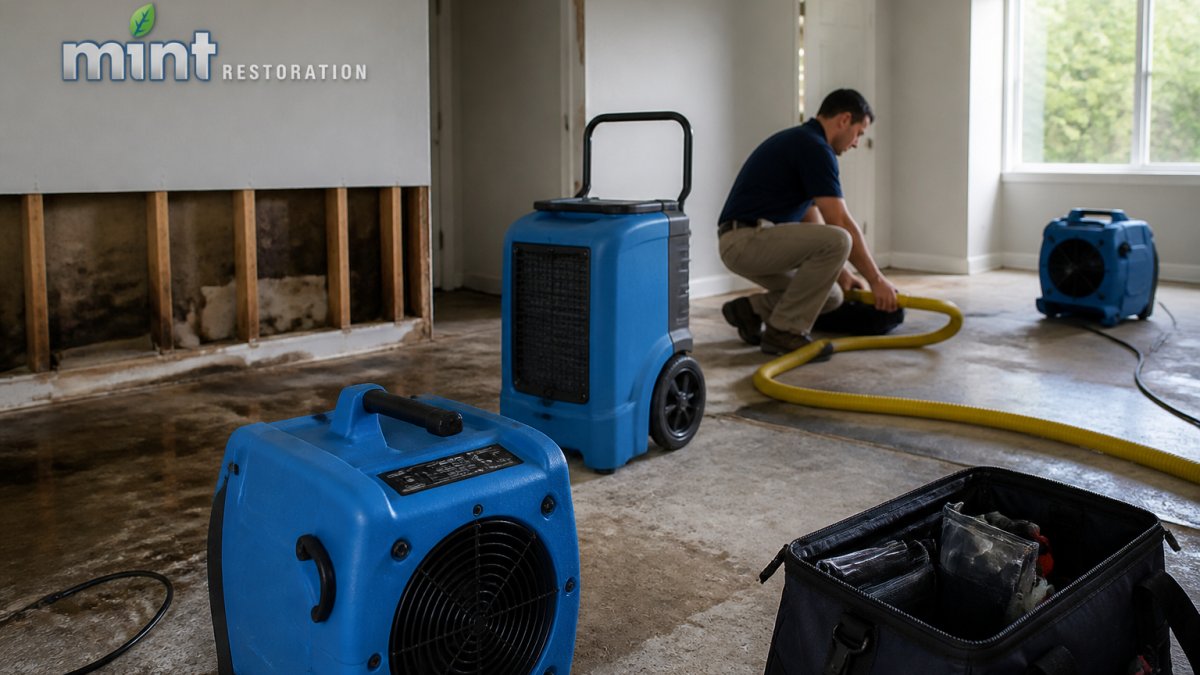
Not every restoration company handles every damage type, and the mismatch is where projects stall. Water damage, fire and smoke damage, storm damage, mold remediation, and hazardous material work such as asbestos or meth contamination each require different certifications, equipment, and containment procedures.
Match the contractor to the job:
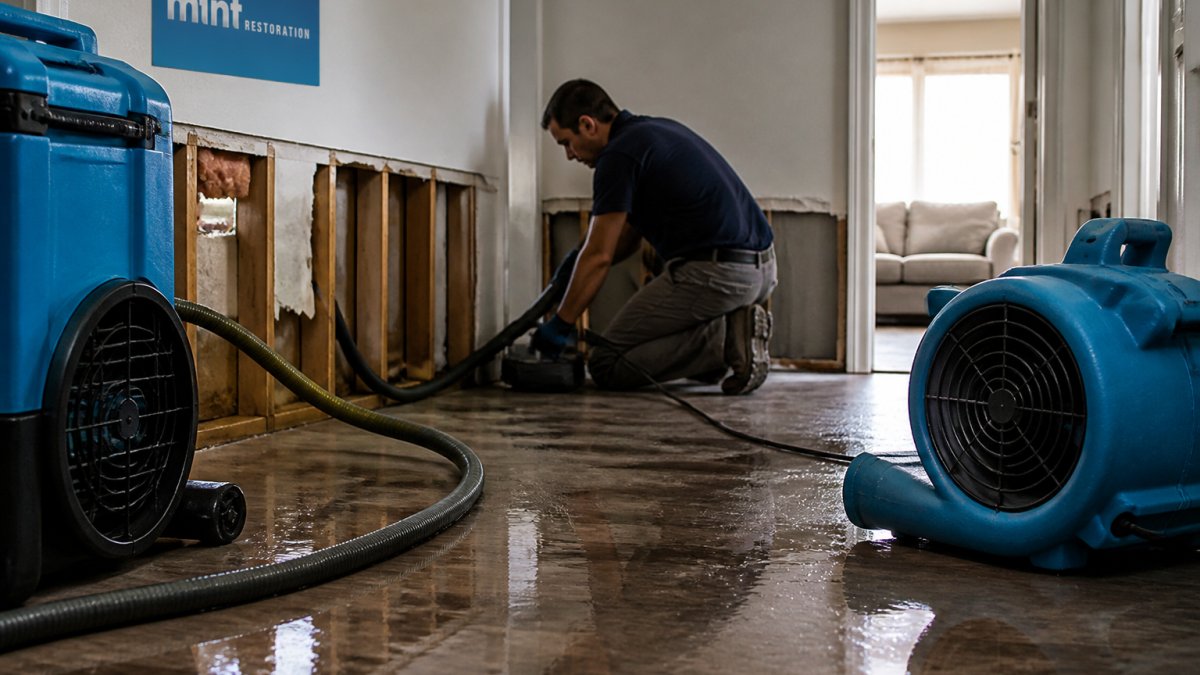
- Water damage: drying equipment, moisture meters, and IICRC-trained technicians
- Fire and smoke: odor control, soot removal, and structural assessment
- Mold: containment, air scrubbing, and remediation protocols
- Asbestos or meth: licensed hazardous material handling and clearance testing
- Commercial property: after-hours scheduling and occupant protection planning
Renters and landlords should also confirm who signs the work authorization and who communicates with the adjuster. On commercial jobs, ask how the contractor will protect occupants and keep the building partially operational.
Conclusion: Make the Decision Before the Emergency Hits
The hardest part of hiring a restoration contractor is that you are usually choosing one at the worst possible moment, with water rising or smoke still in the air. That is why the vetting should happen before you need it. Save a checklist, know which certifications matter, and have two or three vetted names on hand.
At Mint Restoration, we built our process around exactly that pressure. We are a fully licensed, insured, and bonded general contractor with over 30 years of experience, IICRC, RIA, ASCR, and The National Institute of Disaster Restoration certified technicians, and a 60-minute on-site response time backed by 24/7 availability, including holidays. Every project carries a one-year warranty on all work.
Get started with Mint Restoration and restore your property to its pre-disaster condition with a team that documents every step.
Frequently Asked Questions
What should I look for when hiring a restoration contractor?
Start with credentials: a state license, bonding, and active liability and workers' compensation insurance. Confirm the company holds IICRC certification and employs technicians trained to restoration standards. Ask whether it handles both mitigation and reconstruction, since a firm that does both keeps one scope of work and one point of contact. Check response time commitments, equipment readiness, and how often it provides status updates. Finally, request references from similar projects and read online reviews for patterns, not single complaints.
What questions should I ask a restoration contractor before hiring?
Ask whether they work directly with your insurance carrier and can communicate with your adjuster. Ask if they provide a written, itemized estimate before work begins. Confirm how quickly they can be on site and whether that response time is available 24/7, including holidays. Ask who will supervise the crew, how status updates are delivered, and what the warranty covers after the final walkthrough. Get answers in writing so you can compare them against other bids.
What are red flags when hiring a restoration contractor?
Watch for door-to-door solicitation immediately after a storm, demands for large upfront payments before any work starts, and estimates that come in far below every other bid. Vague or incomplete proposals, no physical business address, no proof of licensing or insurance, and reluctance to put scope or warranty terms in writing are all warning signs. Pressure to sign the same day, before you have read the contract, is another reason to walk away.
How long does restoration take from mitigation to final walkthrough?
Timelines depend on damage type and extent. Water damage mitigation, including extraction and drying equipment placement, often runs three to five days, with moisture readings confirming the structure is dry. Mold remediation typically takes several days to a couple of weeks depending on containment needs. Fire and smoke damage, or reconstruction after structural loss, can run from a few weeks to several months. Ask for a written project timeline with milestones so you can track progress.
Can a restoration contractor work directly with my insurance company?
Yes, many restoration contractors communicate directly with your insurance carrier and adjuster, providing documentation, moisture readings, and photos that support the claim. This does not transfer your policy rights, and you remain the policyholder. Ask upfront how the contractor handles insurance claim paperwork, whether they bill the carrier directly or require payment from you, and how they document the scope of work so the adjuster can review it without delays.