 how-to
Emergency Water Damage Response Time Expectations
Table of Contents
- Why Emergency Water Damage Response Time Matters
- What to Do Immediately After Water Damage
- The Critical Water Damage First 24 Hours
- Water Damage Emergency Checklist for Homeowners
- How Restoration Companies Assess and Respond
- Understanding the Water Damage Restoration Process
- Setting Realistic Expectations for Your Recovery Timeline
- Frequently Asked Questions
Last Updated: October 11, 2026
Why Emergency Water Damage Response Time Matters
When water intrusion happens, every minute counts. The first few hours determine whether your property can be fully restored or whether mold colonization becomes inevitable. Understanding emergency water damage response time expectations is critical for homeowners and business owners.
Water migrates into walls, under flooring, and structural materials. Within 24-48 hours, moisture levels reach the threshold where mold begins to grow. Delayed response turns manageable water loss into months-long remediation projects.
Speed of arrival matters, but speed of action matters more. You need both rapid dispatch and immediate mitigation work, a company that arrives in two hours but delays extraction hasn't solved your problem.
What to Do Immediately After Water Damage
Your actions in the first 30 minutes directly impact damage extent. Before acting, assess whether it is safe to enter, water damage creates multiple hazards that are not always visible.
Safety Triage: Assess Before You Act
Electrical Hazards Standing water near electrical outlets, panels, appliances, or light switches creates immediate electrocution risk.
Water Contamination Category Water source determines protective equipment needed. Clean water from burst pipes or overflowing bathtubs is low-risk. Gray water from appliances or toilet overflow requires gloves and hand washing.
Structural Instability Water weakens building materials. If drywall is soft or bulging, ceilings are sagging, flooring feels spongy, or you hear cracking sounds, the structure may be compromised.
When to Evacuate and Call Emergency Services Leave the property immediately and call 911 if:
- Water is rising and you cannot safely exit
- You smell natural gas or see gas line damage
- Electrical panels are submerged or sparking
- Structural damage is visible (cracks in walls, sagging ceilings, tilting walls)
- You feel dizzy, nauseous, or experience difficulty breathing (signs of mold exposure or chemical contamination)
- Water is mixed with fuel, chemicals, or industrial waste
Safe Actions You Can Take
Once you have confirmed the area is safe to enter, these actions reduce moisture absorption into structural materials:
Stop the water source if safe: turn off the main water valve for plumbing leaks. Move electrical appliances away from standing water. Do not use electrical pumps or wet vacuums near live electrical sources; wait for professional equipment.
Document everything with photos and video for insurance claims. Photograph the water source, standing water extent, wet materials, and visible damage with date and time.
Remove standing water with towels, mops, and buckets if water is clean and the area is electrically safe. Open windows and doors for air circulation. Move wet furniture and belongings to dry areas.
Do not use heat sources like space heaters, hair dryers, or ovens, heat accelerates mold growth in hidden areas and may ignite flammable materials.
The Critical Water Damage First 24 Hours
The 24-hour window after water intrusion determines restoration success or failure. Water extraction, initial drying, and damage assessment must begin immediately to prevent irreversible secondary damage.
Professional water mitigation teams prioritize speed because water absorption into drywall, insulation, and subflooring happens fast. After 48 hours, moisture creates an ideal environment for mold colonization. The first 24 hours is your only window to prevent this.
A qualified restoration company should arrive within 1-2 hours, begin water extraction immediately, set up air movers and dehumidification equipment, conduct moisture assessment, remove wet materials that cannot be dried, and begin structural drying.
The 24-hour window is the critical first phase; full drying typically takes 3-7 days. Decisions made in those first 24 hours determine whether you face restoration or reconstruction.
Water Damage Emergency Checklist for Homeowners
Use this checklist immediately after water intrusion to protect your property and document the incident for insurance purposes.
- Stop the source of water (turn off main valve, address leaking appliance)
- Ensure electrical safety (turn off power to affected areas if water is near outlets)
- Call your insurance company and document the time of notification
- Take photos and video of all water damage and affected areas
- Remove standing water with towels, mops, and buckets
- Move wet furniture and belongings to dry areas
- Open windows and doors for air circulation
- Call a professional water damage restoration company immediately
- Ask the restoration company for their estimated arrival time
- Do NOT use heat sources to dry materials
- Do NOT enter areas with significant water intrusion if electrical hazards exist
- Keep all receipts and documentation for insurance claims
- Monitor humidity levels in affected areas after initial mitigation
This checklist keeps you safe while minimizing additional damage before professionals arrive. The goal is to slow water absorption and mold risk while waiting for expert assessment and mitigation work.
How Restoration Companies Assess and Respond
Emergency water damage response time involves multiple separate timelines. Understanding these distinctions helps homeowners compare providers accurately.
Understanding Response-Time Metrics: What Counts as "Fast"?
Restoration companies use different language to describe speed. These terms are not interchangeable, a company fast on one metric may be slower on another.
Call-Back Time This is how long it takes for a human to answer your call or return your voicemail.
Dispatch Time This is how long from your call until a crew is sent. Dispatch time is often 15-45 minutes for established companies with local crews.
Arrival Time This is how long from dispatch until crew arrival. A realistic expectation is 1-2 hours from your initial call for local, established companies.
Mitigation Start Time This is when the crew begins water extraction, equipment setup, and damage assessment, should begin within 15-30 minutes of arrival.
How to Compare Provider Promises
When calling restoration companies, ask these specific questions:
- "What is your average arrival time from the time I call?" (This combines call-back, dispatch, and travel time into one realistic number.)
- "What time of day am I calling, and does response time change at night or on weekends?" (Many companies have slower response times outside business hours.)
- "Will a crew be available within 2 hours, or will I be on a waiting list?" (This reveals whether they have local crews or must travel from a distance.)
- "Once your crew arrives, how long before extraction equipment is running?" (This is the metric that matters most for mold prevention.)
- "Do you have equipment staged locally, or will you need to travel to get it?" (Local equipment means faster setup; remote equipment means delays.)
- "What happens if I call during a widespread event like a major storm?" (Honest companies will tell you response time may extend to 4-8 hours because all crews are deployed.)
Compare answers across at least two companies.
On-Site Assessment and Mitigation
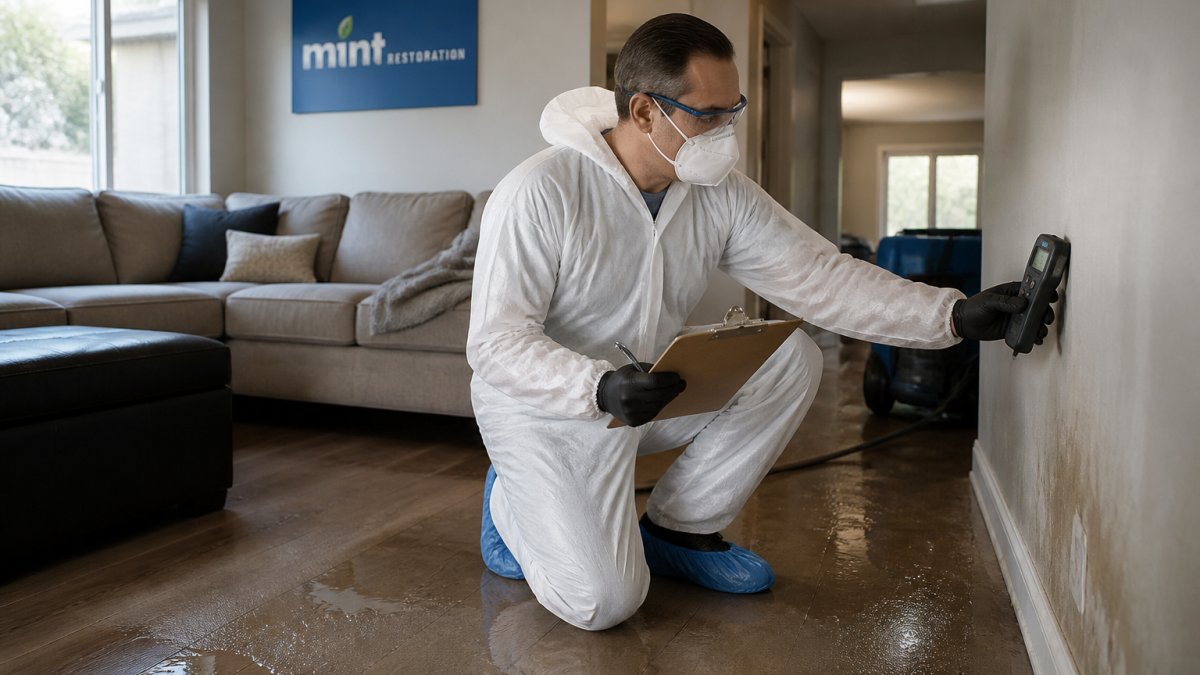
The restoration team uses moisture meters to identify water intrusion in walls, under flooring, and hidden cavities.
Damage assessment includes documentation for insurance claims: photographs, moisture measurements, and written estimates.
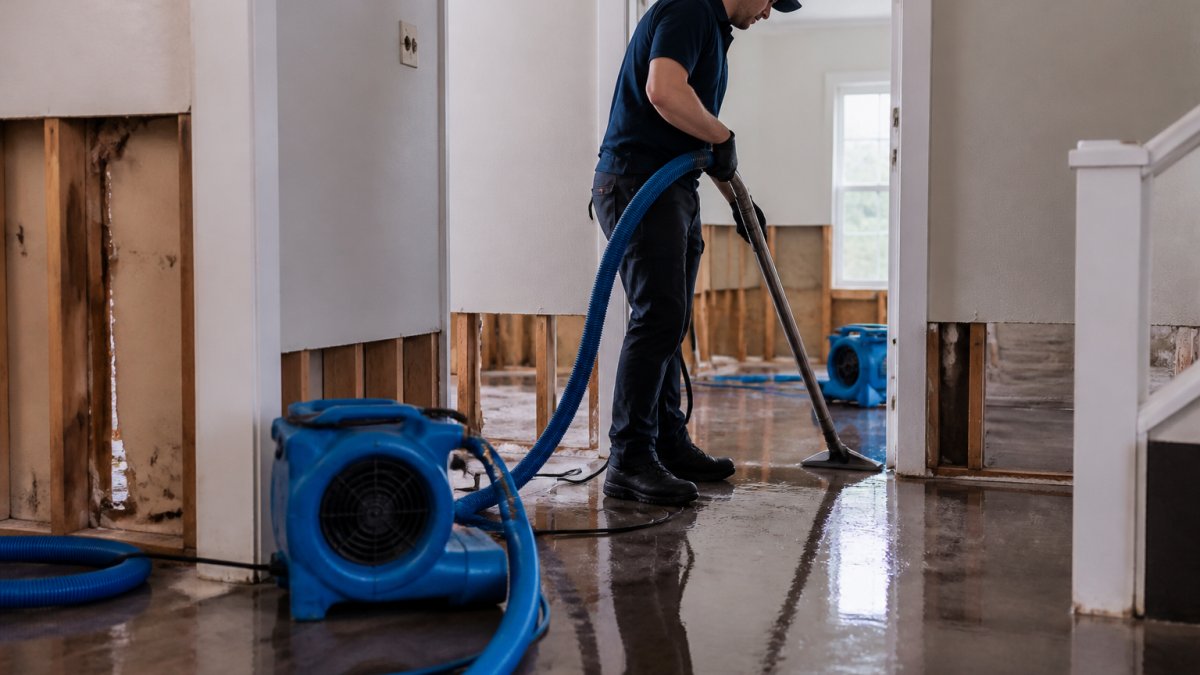
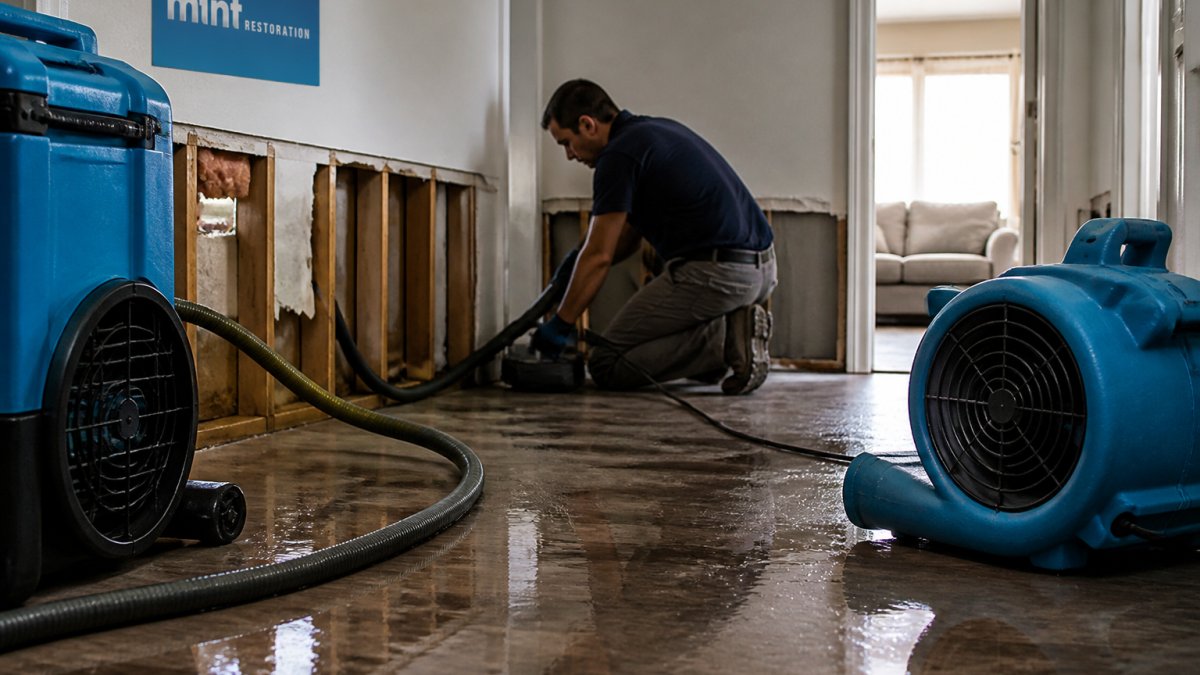
Initial mitigation begins within the first hour: water extraction removes standing water, air movers and dehumidifiers begin structural drying, and unsalvageable materials are removed.
Understanding the Water Damage Restoration Process
The restoration process moves through distinct phases after the initial emergency response. Understanding this timeline helps you set realistic expectations for your recovery.
Phase 1: Water Extraction and Initial Assessment (Hours 1-4)
Standing water is removed using industrial pumps. The team continues moisture assessment and removes wet materials that cannot be dried to prevent mold colonization.
Phase 2: Structural Drying (Days 1-7)
Air movers, dehumidifiers, and specialized drying equipment remove moisture from structural materials. The team monitors moisture levels daily until safe levels are reached.
Phase 3: Cleaning and Sanitizing (Days 3-5)
Once structural drying is underway, cleaning and sanitizing begins. All affected surfaces are cleaned to remove contamination. Sanitizing may be required depending on water category.
Phase 4: Repairs and Reconstruction (Days 7-30)
Once drying is complete and moisture levels are verified, reconstruction begins. Damaged drywall, flooring, insulation, and other materials are replaced. Paint, trim, and finishes are restored to match the original condition.
Total timeline depends on water damage extent and materials affected. Small localized losses resolve in 7-10 days; significant intrusions take 3-4 weeks. Setting realistic expectations early prevents frustration and keeps the process on track.
Setting Realistic Expectations for Your Recovery Timeline
Emergency water damage response time gets your professional team on site quickly, but full recovery extends well beyond that initial arrival.
Timeline depends on water category (clean, gray, or contaminated), extent of intrusion, environmental factors like temperature and humidity, and crew availability for reconstruction.
For most residential water damage incidents:
- Emergency response: 1-2 hours
- Water extraction: 4-8 hours
- Structural drying: 3-7 days
- Cleaning and sanitizing: 1-3 days (overlaps with drying)
- Repairs and reconstruction: 1-4 weeks
This timeline assumes the water source is stopped, the property is accessible, and mold hasn't begun. Delays in any phase extend recovery.
Ask for daily updates on moisture levels, drying progress, and timeline changes. Keep your insurance adjuster informed of progress and complications.
The goal is returning your property to pre-damage condition quickly while ensuring all moisture is removed and secondary damage is prevented. Companies that rush drying to accelerate reconstruction often face mold problems weeks later.
When water damage strikes, your response in the first hour determines your outcome. Understanding emergency water damage response time expectations helps you act decisively and choose a restoration partner who delivers both rapid arrival and thorough mitigation work.
At Mint Restoration, we provide 60-minute on-site response times with 24/7 emergency availability. With over 30 years of experience and IICRC-certified technicians, we handle every phase of the water damage restoration process, from emergency mitigation to final reconstruction. Learn more about water damage restoration best practices to understand the standards our team follows.
GET A QUOTE and let our team assess your water damage situation. The faster you act, the better your outcome.
Frequently Asked Questions
How quickly should a water damage restoration company arrive after I call?
Most emergency water damage response teams aim to arrive within 1-2 hours of your call, with many offering 60-minute response commitments. The exact timeline depends on your location, current crew availability, and weather conditions. When you call, ask the dispatcher for a specific arrival window. Do not wait, call immediately upon discovering water intrusion, as every hour increases the risk of secondary damage and mold colonization.
What should I do in the first 24 hours after water damage?
Stop the source of water if safe to do so. Turn off electricity to affected areas and evacuate if necessary. Document damage with photos for insurance claims. Remove items above water level and open windows for air circulation if weather permits. Do not enter standing water or contaminated areas. Call a professional restoration company immediately, the water damage first 24 hours are critical for preventing mold growth and structural damage. Contact your insurance company to report the loss.
How long can water damage sit before mold starts growing?
Mold can begin colonizing within 24-48 hours of water intrusion if moisture levels remain elevated. The exact timeline depends on temperature, humidity, and material type. Porous materials like drywall and carpet are especially vulnerable. This is why the 48-hour window is considered the critical threshold for beginning water mitigation and drying. Rapid water extraction and dehumidification during this period significantly reduce mold risk and secondary damage.
What happens during an emergency water damage inspection?
A certified inspector conducts an on-site assessment to identify water source, affected materials, and contamination level (water category and IICRC class). They use moisture monitoring equipment to measure moisture levels in structural materials and determine the scope of damage. Documentation includes photos and damage assessment reports needed for insurance claims. This initial inspection typically takes 30-60 minutes and guides the restoration process timeline, water extraction method, and drying strategy.