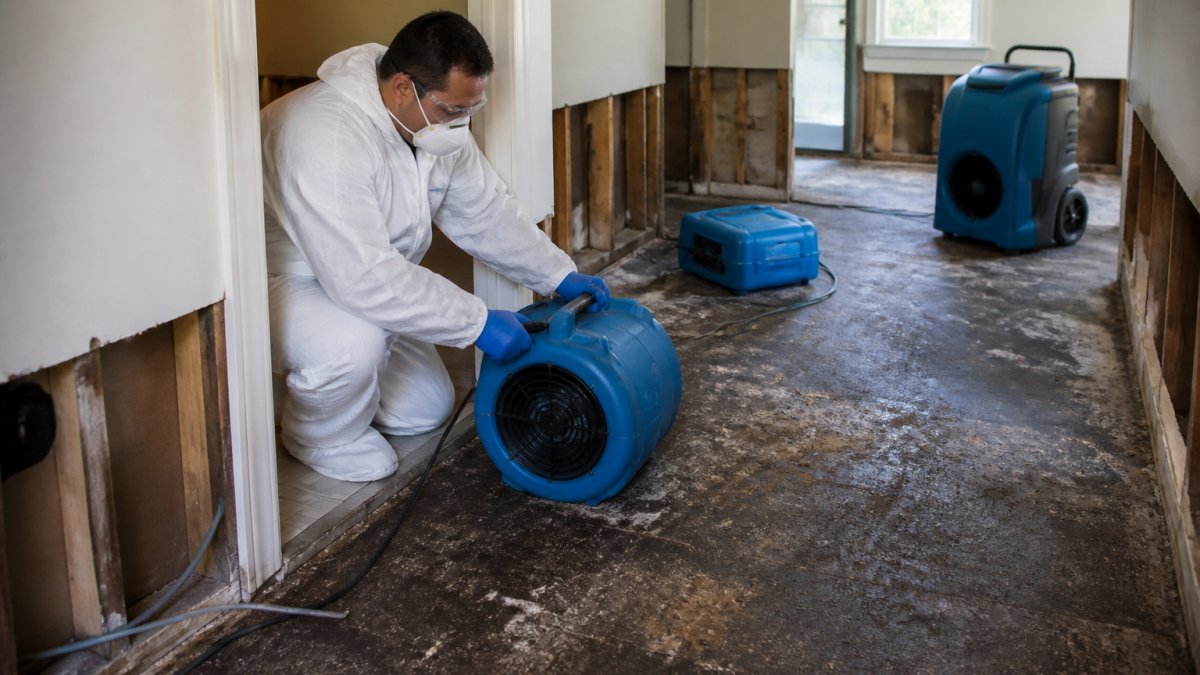
 ultimate-guide
How Long Does Restoration Take? Timeline Guide
Table of Contents
- What the Restoration Timeline Actually Looks Like
- Factors Affecting Restoration Time
- Water Damage Restoration Timeline: Day by Day
- How Long Does Mold Remediation Take?
- Minor vs. Major Damage: Two Timelines Side by Side
- DIY vs. Professional Restoration: What the Clock Says
- Insurance Claims, Living Arrangements, and the Human Side of Waiting
- Conclusion: Planning Your Restoration Timeline
- Frequently Asked Questions
Last Updated: October 4, 2026
What the Restoration Timeline Actually Looks Like
Water damage restoration means extracting standing water, drying structural materials, and repairing what the moisture touched. How long does restoration take?
At Mint Restoration, we've handled disaster recovery for over 30 years, and the pattern is consistent: water damage treated within a day or two usually dries in under a week, while damage that sits a week or more often becomes mold remediation, adding days or weeks.
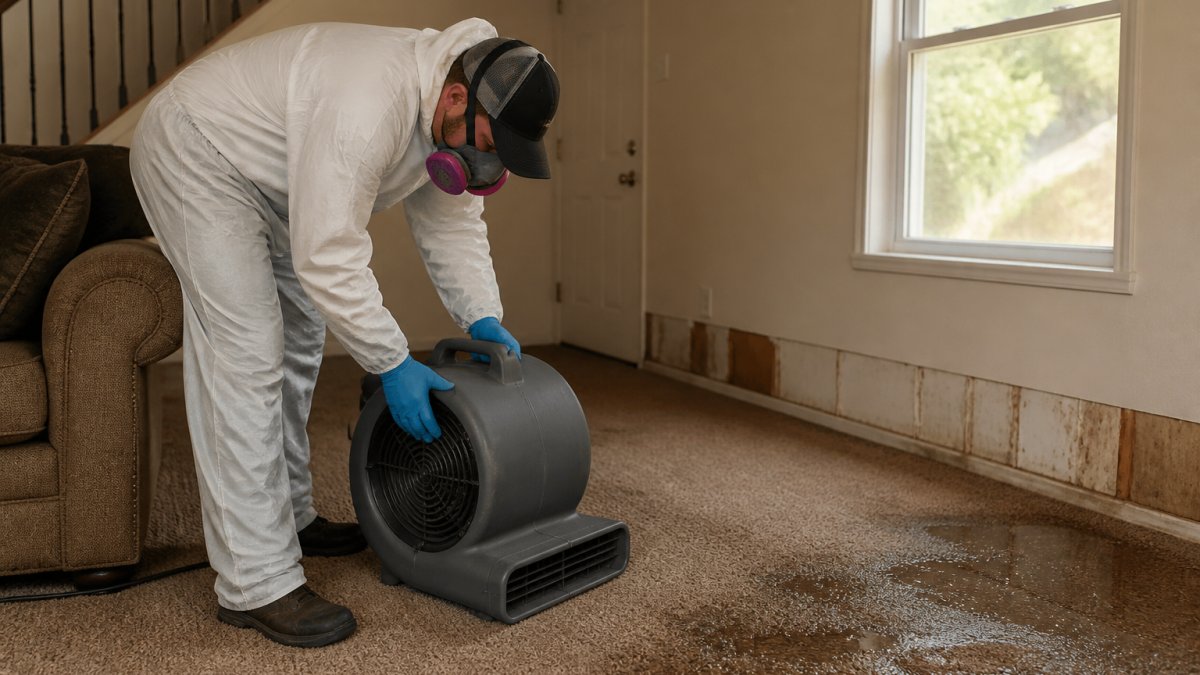
Most homeowners are surprised by how much of the timeline is waiting, not working: drying equipment runs continuously while you wait for moisture readings to drop.
Factors Affecting Restoration Time
Three variables drive almost every timeline: the category and class of the water loss, whether damage is hidden behind walls or under floors, and how quickly insurance and permits move.
Water category and class of loss
Category describes contamination: Category 1 is clean supply-line water, Category 2 is gray water from appliances or toilets, and Category 3 is black water, sewage or floodwater, requiring full sanitization and antimicrobial treatment before rebuilding. Class describes how far moisture spread: Class 1 stays in a small area, while Class 4 means hardwood, subfloor, and plaster absorbed water deeply. Higher category and class mean more removal, drying time, and replacement.
Hidden damage and material types
Moisture travels: it wicks up drywall, pools under subfloor, and condenses inside wall cavities where you can't see it. Thermal imaging and moisture mapping find what a visual inspection misses. Saturated drywall and insulation usually can't be saved; hardwood floors may dry in place or come up entirely. A common mistake is assuming a room is dry because the surface feels dry, moisture content readings tell the real story.
Insurance and permit processing
The adjuster's scope of work sets what gets covered. If your policy requires an adjuster visit before work starts, that visit alone can add days, and permits for structural repairs add more. This is the least predictable part of the timeline and rarely within the contractor's control.
Water Damage Restoration Timeline: Day by Day
Here's the water damage restoration timeline most projects follow, from first call to final walkthrough. Actual dates shift with the factors above, but knowing what happens in each window helps you spot a project falling behind.
Hour 0-2: Emergency call and dispatch
The clock starts when you call. A dispatcher triages the loss, is water still entering, is there sewage, is anyone unsafe, and routes a crew. Response time is the biggest lever on total duration, because every hour of standing water pushes contamination from Category 1 toward Category 2 and spreads moisture into wall cavities and subfloor. Ask for an estimated arrival window and write it down; it's the first timestamp in your claim file.
Hour 2-6: Assessment, categorization, and extraction
On arrival, the crew stops the source if still active, categorizes the water (Category 1, 2, or 3), and classifies the loss (Class 1 through 4) based on how far moisture spread.
Extraction comes next: truck-mounted pumps and wet vacuums pull standing water out of carpet, padding, and hard surfaces. It's usually the fastest phase, hours, not days, but water left in padding or under baseboards keeps feeding the drying phase and stretches the schedule.
Day 1-2: Demolition and setup for drying
Once standing water is gone, the crew removes materials that can't be saved, saturated drywall, wet insulation, sometimes carpet and padding, because they hold moisture against the framing and slow drying everywhere else.
This is where hidden damage most often surfaces. Opening a wall frequently reveals moisture that wicked further than the visible damage suggested, or a slow leak predating the current event.
Day 3-7: Structural drying and daily monitoring
This phase is mostly waiting, and that waiting is the work. Dehumidifiers pull moisture from the air; air movers push it off surfaces so it can be captured.
Most residential drying finishes in 3 to 7 days; Class 4 losses and dense materials like plaster or hardwood run longer. If readings plateau, moisture content stops dropping day over day, the crew looks for a missed source, a blocked cavity, or undersized equipment.
Day 7-10: Post-drying verification and clearance
Before reconstruction starts, the crew verifies materials have returned to acceptable moisture levels. This is a distinct step, not a formality: if framing or subfloor is still above target, rebuilding traps moisture and sets up mold behind new drywall. Verification is also when drying documentation, daily readings, photos, equipment logs, gets finalized to support the drying portion of your claim.
Week 2-4 and beyond: Reconstruction and completion
Once materials are dry and verified, reconstruction begins: drywall replacement, painting, flooring, trim, and structural repair. This is the longest phase and the one most affected by permits and material lead times.
One pattern worth knowing: drying is predictable, reconstruction is not. Contractors can forecast drying within a day or two, but permit turnaround, material availability, and adjuster approvals introduce variability no crew controls.
How Long Does Mold Remediation Take?
Mold remediation typically takes 5 to 10 days for a contained area, longer if mold has spread through walls, HVAC systems, or multiple rooms. It includes containment, removal of affected materials, antimicrobial treatment, and sometimes HVAC cleaning. The timeline depends on how much mold there is and whether the underlying moisture problem is fixed, if the water source isn't resolved first, mold comes back.
Minor vs. Major Damage: Two Timelines Side by Side
Minor and major losses aren't just different in scale. They're different in kind.
| Factor | Minor Damage | Major Damage |
|---|---|---|
| Water category | Category 1, clean | Category 2-3, contaminated |
| Typical drying time | 3-5 days | 7+ days |
| Demolition needed | Little to none | Drywall, subfloor removal |
| Sanitization | Rarely required | Antimicrobial treatment, sewage cleanup |
| Reconstruction | Days | 1-4 weeks |
| Total timeline | About 1 week | 3-6 weeks |
DIY vs. Professional Restoration: What the Clock Says
DIY looks faster on paper, you skip the scheduling call and start immediately. In practice it usually takes longer, because the hard part isn't mopping up water; it's knowing when materials are actually dry.
Professional restoration compresses the timeline through equipment capacity: industrial dehumidifiers and air movers dry a room in days that would take a consumer-grade fan weeks, and they produce the documentation your adjuster needs.
Insurance Claims, Living Arrangements, and the Human Side of Waiting
The technical timeline is only half the story. The other half is where you sleep, what your adjuster approves, and how long you wait for a check, delays that have nothing to do with drying equipment.
How insurance processing adds weeks to the clock
Insurance is the most common source of delay, operating on a different clock than the restoration crew. A few mechanisms drive most of the lag:
- Adjuster scheduling. If your policy requires an adjuster visit before work begins, that visit can take days to schedule, and the crew can't start covered work until the scope is agreed. Emergency mitigation usually proceeds regardless, because delaying it makes the loss worse, but the reconstruction phase often waits on the adjuster.
- Scope-of-work disputes. The adjuster's initial scope is an estimate, not a final number. When the crew's documentation shows more damage than the adjuster's first pass captured, the scope gets revised, and revisions take time. A contractor who photographs everything and logs daily moisture readings gives the adjuster what's needed to approve the revision faster.
- Documentation gaps. Claims stall when the file is incomplete. Missing photos, missing moisture logs, or a scope that doesn't match the invoice all trigger back-and-forth. This is the most controllable delay: the better the documentation, the fewer the round trips.
- Payment timing. Even an approved claim doesn't pay instantly. Depending on the policy and the carrier, funds may arrive in stages, an initial payment for mitigation, a later payment for reconstruction, and reconstruction often can't start until the first payment clears.
A practical takeaway: treat the claim file as part of the project. Keep every receipt, reading, and photo, the homeowner who hands the adjuster a complete package moves through the process faster than one reconstructing the timeline from memory.
Is your home habitable during restoration?
Habitability depends on the phase and type of loss, and it's worth asking upfront rather than assuming.
- Minor, Category 1 losses, a supply-line leak in one room, for example, usually allow you to stay home. Expect noise from air movers and dehumidifiers, and expect the affected room to be off-limits while equipment runs.
- Category 2 or 3 losses, especially anything involving sewage or floodwater, often make the property unsafe to occupy during mitigation. Contamination, airborne particles, and the sanitization process all argue for staying elsewhere until clearance.
- Reconstruction phases vary widely. A drywall-and-paint rebuild may be livable with some disruption; a project that removes flooring, cabinetry, or structural elements may not be.
Ask your contractor directly: is the property habitable during each phase, and what triggers a change? Then check whether your policy covers temporary housing, often called loss of use, and what documentation the carrier requires. Waiting until mid-project to sort this out turns a manageable disruption into a stressful one.
Scope creep: when the estimate meets reality
Hidden damage discovery is the wildcard in every timeline. Once walls open, crews sometimes find long-running leaks, mold behind drywall, or structural rot predating the current event. The scope expands, the estimate gets revised, and the schedule resets.
This isn't a sign the original estimate was wrong; some damage can't be seen until the materials covering it come off.
Conclusion: Planning Your Restoration Timeline
The honest answer to how long does restoration take is that it depends on water category, hidden damage, and how fast the paperwork moves. What you control is the start: getting a crew on site within hours instead of days. Mint Restoration provides 60-minute on-site response, 24/7 availability including holidays, and a one-year warranty on all work, backed by IICRC, RIA, and ASCR certified technicians.
Frequently Asked Questions
How long does restoration take after water damage?
Most water damage restoration takes 5 days to 3 weeks from start to finish. Emergency mitigation (water extraction, moisture mapping, and air movers) happens in the first 24-48 hours. Structural drying typically runs 3-7 days, depending on the class of water loss and materials affected. Reconstruction, such as drywall replacement or flooring, adds 1-4 weeks. The restoration timeline stretches when hidden damage is found or insurance approval is delayed.
What factors affect restoration time the most?
The biggest factors affecting restoration time are the category of water damage, the class of water loss, and how quickly mitigation begins. Category 1 clean water dries faster than Category 3 sewage cleanup, which requires antimicrobial treatment and sanitization. Hidden damage behind walls or under subfloors, discovered with thermal imaging or moisture meters, can add days. Insurance adjuster scheduling and permit approvals also extend the restoration timeline.
How long does mold remediation take?
Mold remediation typically takes 3 to 10 days for small to moderate infestations, and several weeks for widespread growth. The timeline depends on how far mold has spread, the moisture source, and whether reconstruction is needed after removal. A typical mold remediation project includes containment, removal of affected materials, antimicrobial treatment, HVAC cleaning if needed, and a completion inspection. Fixing the underlying water problem is essential; otherwise mold returns.
Can I stay in my home during restoration?
It depends on the damage. For small, contained water damage, you can often stay home while air movers and dehumidifiers run. For Category 3 water (sewage), fire damage, or mold remediation that requires containment, you may need to relocate for several days to weeks. Your insurance policy may cover additional living expenses. Ask your restoration contractor and insurance adjuster early so you can plan living arrangements before work begins.