 How-to
How to Get Insurance to Cover Mold Remediation
Last Updated: November 14, 2026
Quick Summary
Insurance covers mold remediation only when the mold results from a sudden, accidental event your policy covers, like a burst pipe. Mold from slow leaks, poor upkeep, or long-term moisture is typically excluded, and many policies cap mold payouts with a sublimit.
- Mold is rarely a named peril; it is covered only when it traces back to a covered peril.
- Many policies that cover mold set a mold sublimit far below overall dwelling coverage.
- Report the loss promptly, get a claim number, and ask about the mold sublimit.
- Document the water source and visible mold before you clean anything.
- Do not discard damaged materials until the adjuster has inspected them or authorized disposal.
Table of Contents
- Does Insurance Cover Mold Remediation? The Short Answer
- When Mold Damage Is Covered by Homeowners Insurance
- What Mold Remediation Exclusions Look Like in a Home Insurance Policy
- Does Home Insurance Cover Mold from Water Damage?
- Does Homeowners Insurance Cover Mold from a Roof Leak?
- How to Get Insurance to Pay for Mold Remediation: A Step-by-Step Claim Process
- Mold Remediation Cost and How Insurance Handles It
- When to Call a Professional for Mold Remediation and Insurance Documentation
- Frequently Asked Questions
Does Insurance Cover Mold Remediation? The Short Answer
Sometimes it does, and often it doesn't. Whether insurance covers mold remediation depends almost entirely on what caused the mold.
At Mint Restoration, we help property owners in Yuma and the surrounding areas sort out exactly this question. Here's the part most guides get wrong: the mold itself isn't really the issue.
Below, we'll walk through when coverage applies, what exclusions look like, and how to file a claim that actually gets paid.
When Mold Damage Is Covered by Homeowners Insurance
Mold damage is covered when it results from a sudden, unexpected event that your policy already covers.
According to U.S. News & World Report's guide to homeowners insurance and mold, remediation is typically covered when mold develops because of a sudden, unexpected covered event.
That word "sudden" does a lot of work. A pipe that bursts while you're at work is sudden.
Sudden and Accidental Water Damage
Sudden and accidental water damage is the clearest path to coverage. Think burst pipes, a washing machine that fails mid-cycle, or a water heater that lets go overnight.
These events share two traits:
- They happen fast and without warning
- They aren't the result of skipped maintenance
When mold shows up days later, it's tied to that covered event. Document the water source first, then the mold.
The Role of a Covered Peril
A covered peril is a specific event your policy lists as protected, such as fire, wind, or accidental discharge from plumbing. Mold is rarely named as its own peril. It's covered only when it traces back to one that is.
So the question isn't "does my policy cover mold?" It's "does my policy cover what caused the mold?" Answer that, and you know where you stand.
What Mold Remediation Exclusions Look Like in a Home Insurance Policy
Exclusions are where most mold claims die. Standard home insurance policies commonly exclude mold that stems from poor upkeep, and many cap or limit mold payouts even when coverage applies.
The Texas Office of the Attorney General's guidance on mold claims notes that many residential property policies do not cover mold remediation at all, and those that do may impose a coverage cap.
Gradual Damage, Ongoing Leaks, and Neglect
Gradual damage is the big one. Insurers treat it as a maintenance failure, not a sudden loss. Common exclusion triggers include:
- An ongoing leak you knew about or should have caught
- A roof that needed repair for months
- Condensation or humidity problems left unaddressed
Watch out: telling your adjuster you "noticed the leak a while back" can turn a covered claim into a denial. Be honest, but be precise about the timeline.
Policy Limits and Mold Sublimits
Many policies that do cover mold set a mold sublimit, a separate cap just for mold work. That cap can sit far below your overall dwelling coverage.
Some homeowners buy a mold endorsement to raise the limit. It costs extra, but it's worth asking about if you live somewhere humid or have older plumbing.
Does Home Insurance Cover Mold from Water Damage?
Home insurance covers mold from water damage only when the water event itself was covered. A burst supply line qualifies. A slow drip under the sink usually doesn't.
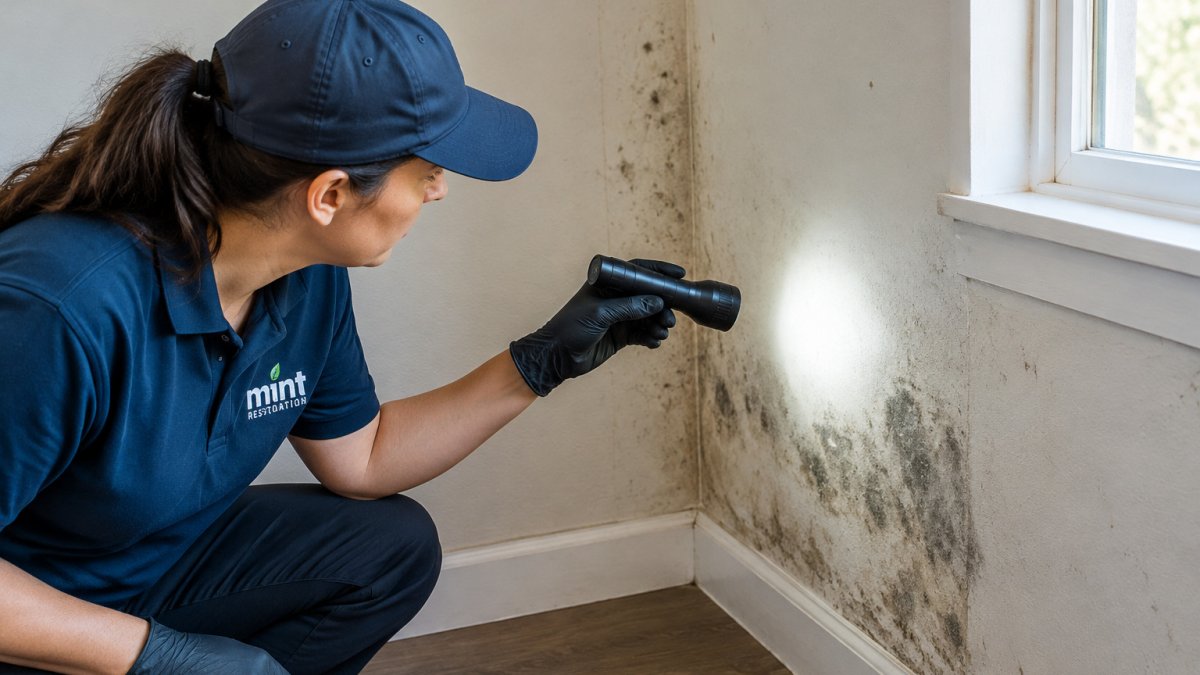
This is where documentation decides everything. If you're unsure whether your mold traces back to a covered event, it helps to check for hidden mold growth early so you can document it before it spreads.
Does Homeowners Insurance Cover Mold from a Roof Leak?
Homeowners insurance covers mold from a roof leak when the leak came from a covered event, like a storm or fallen limb. It typically does not cover mold from a roof that was already worn out or poorly maintained.
The dividing line is cause. Storm damage is sudden and accidental. A roof past its service life is a maintenance issue. Insurers ask which one applies, and they look closely at the roof's condition and age.
How to Get Insurance to Pay for Mold Remediation: A Step-by-Step Claim Process
Getting insurance to pay for mold remediation comes down to proving the mold followed a covered event, and proving it fast.

The First 24 to 48 Hours
- Stop the water. Shut off the supply line, close the valve, or call a plumber. Insurers expect you to prevent further damage, and mitigation costs are often reimbursable when they are reasonable and documented.
- Document before you clean. Photograph the water source, the failed part (a burst fitting, a cracked supply line, a storm-damaged shingle), standing water, and any visible mold. Take wide shots and close-ups, and include something for scale. Date-stamp everything if your phone allows it.
- Call your insurer. Report the loss promptly and get a claim number. Ask whether the policy has a mold sublimit and whether the adjuster wants an independent remediation scope before work begins. Write down the name of everyone you speak with and the date and time.
- Start drying. Run fans and dehumidifiers, remove wet carpet and padding, and pull up saturated items. Keep a log of what you did and when. This is the step that separates a covered claim from a neglect argument.
The Inspection and Scope Phase
- Read your policy before you talk numbers. Find the mold sublimit, the deductible, and any exclusion for repeated or gradual seepage. Knowing your cap early keeps you from authorizing work the policy will not pay for.
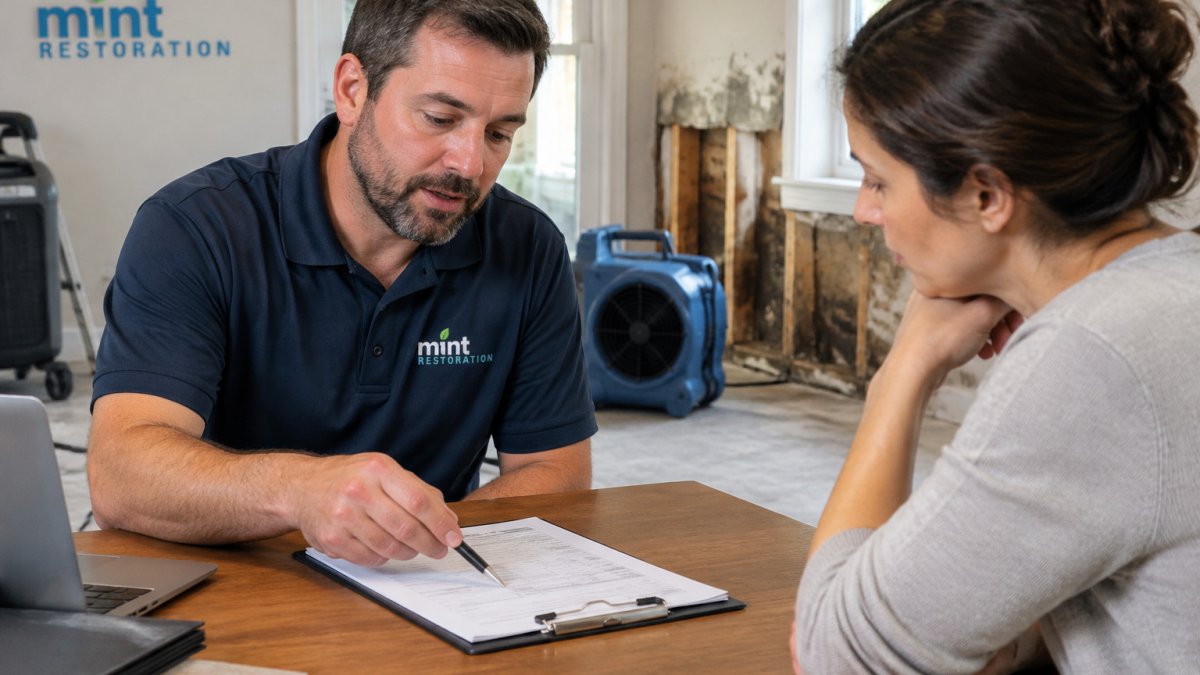
- Get a written remediation scope. A licensed contractor should document the moisture readings, the affected square footage, the materials to be removed, and the containment plan. A written scope carries far more weight with an adjuster than a verbal estimate.
- Submit proof of loss. Include photos, receipts for emergency drying and temporary repairs, the remediation scope, and any maintenance records for the failed component. If the adjuster requests a moisture meter reading or a third-party inspection, provide it promptly.
- Keep every receipt. Emergency drying, temporary repairs, and hotel stays may all be reimbursable under additional living expenses or loss-of-use coverage, depending on the policy.
After the Decision
- If the claim is approved, confirm in writing what the payout covers and whether it is based on actual cash value or replacement cost. Ask how the sublimit and deductible were applied.
- If the claim is denied or underpaid, request the denial in writing and ask for the specific policy language relied on. Review the policy yourself, gather supplemental documentation (moisture readings, contractor photos, repair records), and submit a written appeal. Many policies have an appraisal or dispute-resolution clause you can invoke. If the amount at stake is significant, an independent adjuster or a consumer insurance advocate can review the file.
If the mold is inside wall cavities, our guide on how to handle mold in walls walks through the steps that keep a claim from getting complicated.
Evidence Checklist Before You File
Bring these to your claim:
- Date and cause of the water event
- Photos of the source and the mold, with scale and dates
- Receipts for emergency repairs or drying
What to Do While Waiting for the Adjuster
Don't wait to dry things out. Mold can spread within days, and letting it grow looks like neglect to an adjuster.
Watch out: throwing away the failed part or the moldy drywall before the adjuster inspects it can turn a covered claim into a documentation dispute.
If water is still active, our team can help you mitigate water damage before mold sets in while your claim moves forward.
Here is the claim process broken into the steps, timing, and decision points that matter.
| Step | What to do | Timing |
|---|---|---|
| Stop the water | Shut off supply line, close valve, or call a plumber | First 24 to 48 hours |
| Document | Photograph water source, failed part, standing water, visible mold | Before you clean |
| Call your insurer | Report loss, get claim number, ask about mold sublimit | Promptly |
| Start drying | Run fans and dehumidifiers, remove wet carpet and padding | While waiting for adjuster |
| Read your policy | Find mold sublimit, deductible, and seepage exclusions | Before talking numbers |
| Get a written scope | Licensed contractor documents moisture readings, square footage, containment plan | Inspection and scope phase |
| Submit proof of loss | Photos, receipts, remediation scope, maintenance records | When requested |
| Appeal a denial | Request denial in writing, gather supplemental documentation, submit written appeal | After the decision |
Mold Remediation Cost and How Insurance Handles It
Mold remediation cost varies widely based on the size of the affected area, where the mold is, and how much material has to be removed. Small surface areas cost far less than mold inside walls, ceilings, or HVAC systems. A useful way to read an estimate is to break it into the stages that actually drive the price.
What Drives the Price
- Inspection and testing. A moisture assessment and, where needed, lab sampling to confirm the type and extent of mold. This is often the first line item and the one an adjuster will ask for.
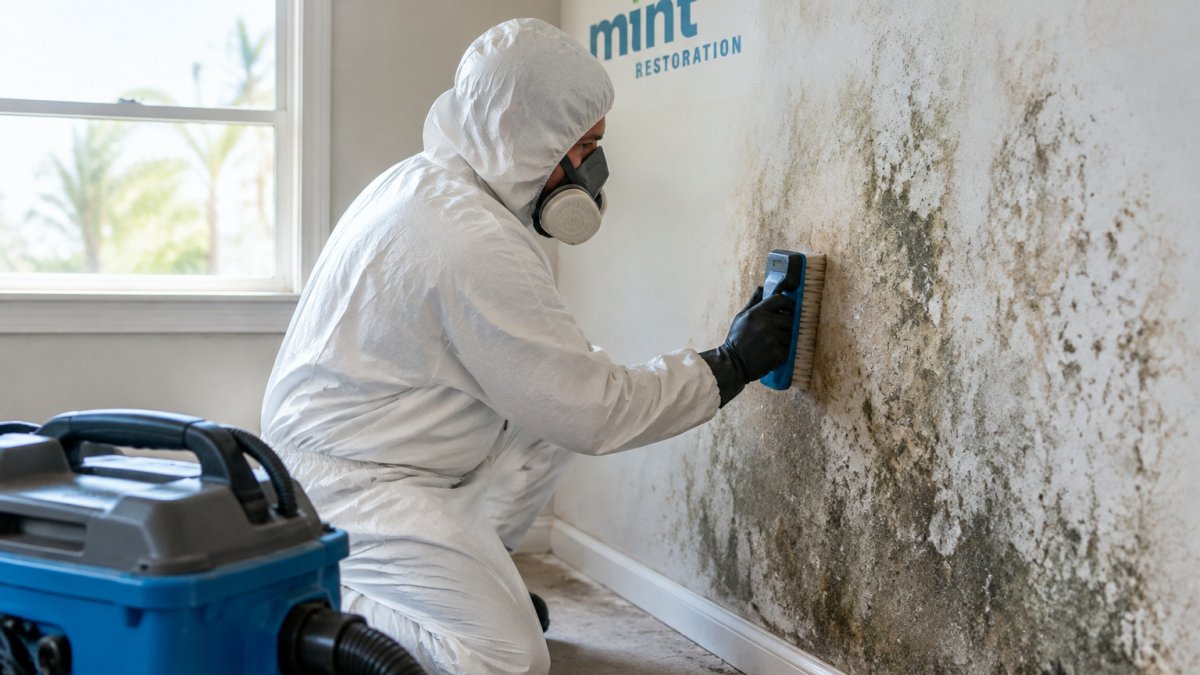
- Containment. Plastic sheeting, negative air pressure, and HEPA filtration to keep spores from spreading to unaffected rooms. Containment adds cost but is usually required for any job beyond a small surface patch.
- Removal. Demolition of porous materials (drywall, insulation, carpet, ceiling tile) and physical removal of mold from structural surfaces. The more material that has to be cut out, the higher the labor and disposal cost.
The location of the mold often matters more than the square footage: mold inside a wall cavity or an HVAC system generally takes more containment, more demolition, and more drying time than the same area on an exposed surface.
How Insurance Applies to the Bill
Most policies that cover mold pay toward remediation up to your sublimit, minus your deductible. Costs above the cap generally come out of your pocket. That is why knowing your limit early matters.
Watch out: a single lump-sum estimate that blends remediation, drying, and reconstruction makes it hard for an adjuster to apply the sublimit correctly and can slow or shrink your payout.
Questions to Ask Before You Approve Work
- Is the estimate broken out by inspection, containment, removal, drying, and repairs?
- Does it state the affected square footage and the moisture readings behind it?
- Is the contractor licensed and insured, and will they bill your insurer directly?
At Mint Restoration, our IICRC and RIA certified technicians handle mold, water, and asbestos remediation as a licensed, insured, and bonded general contractor. We respond on site within 60 minutes, work directly with your adjuster, and back our work with a one-year warranty. If you're choosing a contractor, our vetting steps for restoration contractors show what to ask before you sign.
When to Call a Professional for Mold Remediation and Insurance Documentation
Call a professional when mold covers more than a small patch, when it's inside walls or ductwork, or when you're filing a claim. DIY cleanup rarely produces the documentation an adjuster needs.
At Mint Restoration, our IICRC and RIA certified technicians handle mold, water, and asbestos remediation as a licensed, insured, and bonded general contractor. We respond on site within 60 minutes, work directly with your adjuster, and back our work with a one-year warranty.
Mold claims fail for one reason: the paperwork doesn't prove the cause. Mint Restoration offers 24/7 emergency response, a 60-minute on-site arrival, and direct coordination with your insurance company so your documentation holds up. Contact our building restoration experts to get your remediation moving and your claim on solid ground.
Frequently Asked Questions
Does homeowners insurance cover mold remediation?
It depends on the cause. Most home insurance policies cover mold remediation when mold results from a sudden, accidental event that is itself a covered peril, such as a burst pipe or an appliance failure. Many residential property policies exclude mold remediation, and policies that do cover it may impose a coverage cap. Always read your policy's mold sublimit and exclusions before filing.
Does home insurance cover mold caused by water damage?
Home insurance typically covers mold from water damage only when the water damage came from a sudden and accidental event, like a burst pipe or an accidental discharge from an appliance. Gradual leaks, ongoing seepage, and maintenance-related moisture are usually excluded. Homeowners insurance typically covers remediation when mold develops because of a sudden, unexpected covered event, but coverage still depends on the policy. Document the source and timing of the water intrusion before you file.
Will homeowners insurance cover mold from a roof leak?
A roof leak can lead to covered mold remediation if the leak was sudden and accidental, for example from a storm that damaged the roof. If the leak was gradual or the result of deferred maintenance, the mold is likely excluded. The key is whether the roof damage itself qualifies as a covered peril under your policy. Keep records of the storm date, take photos of the damage, and avoid making permanent repairs before the adjuster inspects.
How much does mold remediation cost, and will insurance pay for it?
Mold remediation cost varies widely based on the size of the affected area, the type of materials involved, and whether containment or drying is needed. Because pricing depends on the scope of the job, homeowners should request a quote for an accurate figure. Insurance may pay for part or all of the remediation if the mold is tied to a covered peril, but policy limits and mold sublimits apply. Get a written estimate from a licensed contractor and submit it with your claim documentation.