 how-to
How to Verify Restoration Contractor Credentials
Last Updated: November 4, 2026
Quick Summary
To verify restoration contractor credentials, ask for the exact legal business name, license number, and qualifier name in writing, then search the state licensing database to confirm the license is active and covers your work. Also confirm IICRC certification, bond, and insurance directly with the issuing bodies.
- A restoration contractor license lookup takes about ten minutes and follows five steps.
- Search by license number first, since trade names and DBAs often do not appear in state records.
- Call the surety company to confirm the bond number is active and in good standing.
- Verify insurance directly with the insurer, not through a number the contractor gives verbally.
- During emergencies, refuse any demand for full payment upfront.
Table of Contents
- Why Verifying Restoration Contractor Credentials Matters
- How to Verify IICRC Certification
- Restoration Contractor License Lookup: A Step-by-Step Process
- How to Check if a Contractor Is Bonded
- Verifying Insurance Coverage Directly With the Insurer
- Questions to Ask a Restoration Company Before Hiring
- Emergency Hiring: Verifying Credentials Under Pressure
- Request Your Credential Verification Checklist From Mint Restoration
- Frequently Asked Questions
Why Verifying Restoration Contractor Credentials Matters
Learning how to verify restoration contractor credentials is an important decision to make after a disaster.
This guide covers certification, licensing, bonding, and insurance, all of which should be confirmed before work starts. For the full step-by-step process, see how to choose a restoration contractor.
A business card tells you nothing. Anyone can print "licensed and insured" on a truck.
The Real Cost of Hiring an Unverified Company
The biggest risk is not a bad repair. It is paying twice. An unverified company can leave work that fails inspection, force you to hire a second contractor, and complicate your insurance claim.
Watch out: if a contractor cannot produce a license number on request, stop the conversation, that missing item usually signals other gaps.
- No verifiable license means no recourse if work fails
- No proof of insurance means you may pay for damage they cause
- No written contract means no clear scope, price, or warranty
Verifying restoration contractor credentials protects your property, your claim, and your wallet.
IICRC certified firm verification guidance
How to Verify IICRC Certification
IICRC certification is a training credential for restoration work, and it comes in two forms: firm certification and individual technician certification. Both can be checked, and you should check both.
The IICRC publishes a public locator for certified firms. Ask for the firm's registered name, then search it yourself rather than accepting a screenshot.
Firm Certification vs. Technician Certification
These are not the same thing, and this is where many homeowners get fooled:
- Firm certification applies to the company and its standing with the certifying body
- Technician certification applies to the person doing the work
- A certified firm should be able to name its certified technicians
A common mistake is accepting a firm certificate as proof that every worker on site is trained. Ask which technicians will be assigned to your job, then ask for their credentials. Certification expires, so current credentials beat old certificates.
Restoration Contractor License Lookup: A Step-by-Step Process
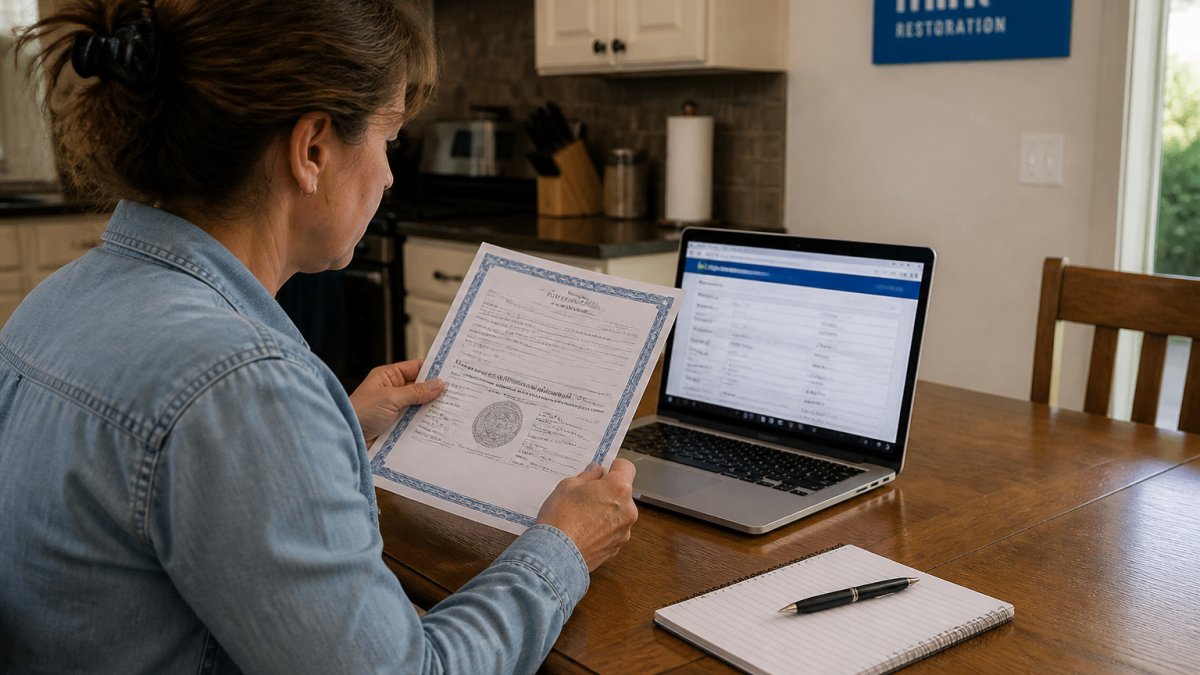
A restoration contractor license lookup takes about ten minutes and follows five steps. Do this before you sign anything.
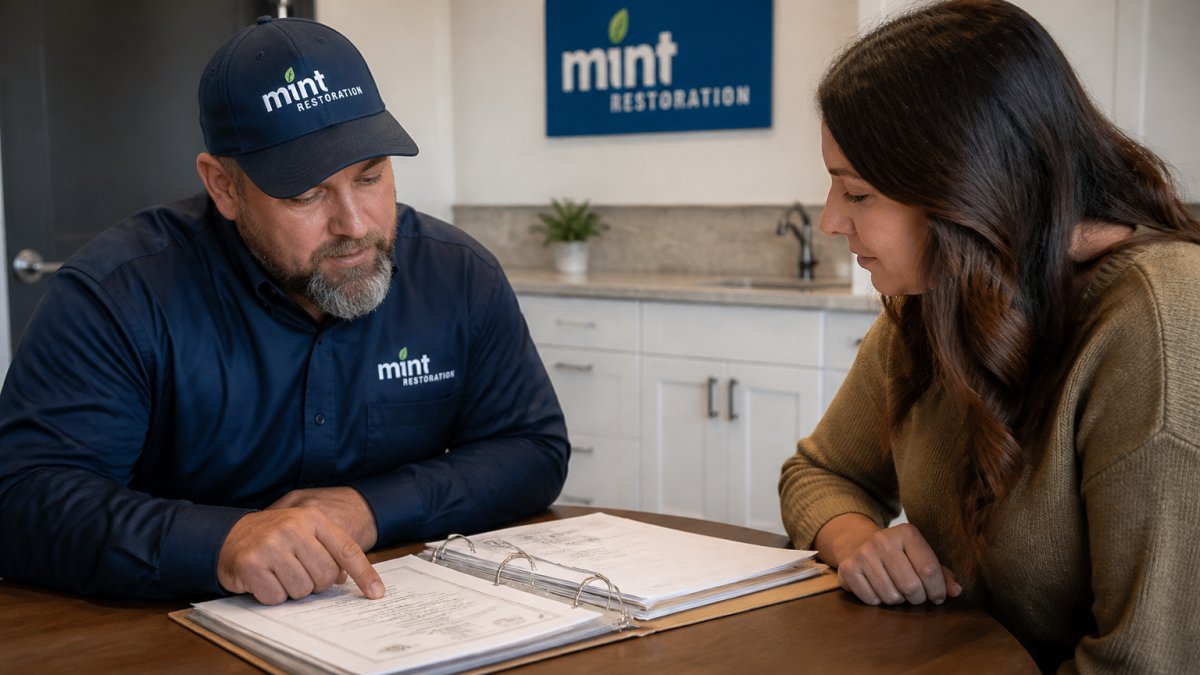
- Ask for the exact legal business name, the license number, and the name of the individual qualifier (the person who holds the license on behalf of the company) in writing
- Search the state licensing database for that name and number
- Confirm the license status is active, not expired, suspended, or revoked
- Check that the license classification covers the work you need done
- Save a screenshot of the result with the date and the database URL
Why the Same Five Steps Play Out Differently by State
State contractor boards do not share one database, and search fields are not standardized. Search by license number first, then by legal business name, because trade names and DBAs often do not appear in the record.
A few patterns are common across states:
- Some boards publish the license classification (general building, residential, or specialty) and its allowed scope. Confirm it covers water mitigation, mold remediation, or rebuild work, not just general construction.
- Some boards list the qualifier by name and show whether that person is still associated with the company. A license tied to a departed qualifier is a warning sign.
- A few states license mold remediation or asbestos abatement as a separate specialty, so a general contractor license alone may not cover that work. If asbestos is involved, learn how to hire a licensed asbestos abatement contractor.
State and local licensing requirements vary, so search the database that applies where the property sits. If the city or county has its own registration requirement, check that registry too, because a state license does not always satisfy a local rule.
What to Do When a License Cannot Be Verified
Sometimes a search returns nothing, or the name does not match. That is not automatically fraud, but it is a stop sign.
If the record still does not match, work through this sequence:
- Ask the contractor for a copy of the license certificate and the board's phone number, then call the board directly to confirm the record
- Ask which legal entity will sign your contract and confirm that entity is the one on the license
- If the contractor claims the license is pending or recently renewed, ask for the application or renewal confirmation number and verify it with the board
- If the contractor cannot produce a verifiable record, pause all work beyond emergency mitigation and do not sign a rebuild contract
- If you believe the contractor misrepresented a license, report it to the state contractor board and, where relevant, your state attorney general's consumer protection division
Watch out: a contractor who gets defensive about a license lookup, or offers a screenshot instead of a searchable record, is telling you something. Legitimate companies expect the question.
A license lookup follows five steps and takes about ten minutes.
| Step | What to do |
|---|---|
| 1 | Ask for legal business name, license number, qualifier name in writing |
| 2 | Search the state licensing database for name and number |
| 3 | Confirm license status is active, not expired or revoked |
| 4 | Check license classification covers the work needed |
| 5 | Save a screenshot with date and database URL |
How to Check if a Contractor Is Bonded
A bond is financial protection, and checking it means requesting the bond number and the issuing surety company, then calling the surety to confirm the bond is active.
Bonding does not guarantee good work. It gives you a path to a claim if the contractor fails to meet obligations. Ask three questions:
- What is the bond number?
- Who issued the bond?
- Is it currently active and in good standing?
Write down the answers and verify them with the surety directly. For asbestos work specifically, read about hiring asbestos removal contractors safely. A certificate on letterhead is easy to fake; a phone call to the issuer is not.
Verifying Insurance Coverage Directly With the Insurer
Proof of insurance is a certificate, and certificates can be altered. Verify coverage directly with the insurer. This is the step most guides skip, and it decides whether you have real financial protection or a PDF.
Ask for a certificate of insurance showing general liability and workers' compensation coverage. Then call the number on the certificate and confirm the policy is active and the limits are real.
What a Certificate of Insurance Should Show
A standard certificate of liability insurance is a one-page summary, not the policy itself. Before you call anyone, read these fields and write them down:
- Named insured, the legal business name and address. This must match the name on your contract, not a trade name or a parent company you have never heard of.
- Insurer name and NAIC number, the NAIC number identifies the insurance company, which makes it harder to fake the issuer.
- Policy number and policy period, the effective and expiration dates. A certificate that expires in the middle of your project is a problem.
How to Verify Directly With the Insurer
Call the insurer's agent or producer listed on the certificate, not a number the contractor gives you verbally. If the number looks unusual, look up the insurer independently and call its main line.
Ask these questions in order:
- Is this policy active today, and what is the exact expiration date?
- What is the named insured on the policy, and does it match the business name on my contract?
- What are the general liability per-occurrence and aggregate limits?
- Does the policy cover the specific type of work being performed, water mitigation, mold remediation, reconstruction, or asbestos-related work?
- Is workers' compensation coverage in place, and does it cover the crews who will be on my property?
- Has the policy been cancelled, non-renewed, or had a lapse in the last twelve months?
The policy limit question is where weak coverage shows up. A low per-occurrence limit may not cover the damage a restoration job can involve, and a policy that excludes mold or fungus is common unless a mold endorsement was added.
- Confirm the business name on the policy matches the contract
- Confirm the policy is current, not cancelled
- Confirm workers' compensation is in place if crews will be on site
How Altered Certificates Usually Give Themselves Away
You do not need forensic software to catch most alterations. Look for these patterns before you call:
- A policy number that does not match the insurer's format
- Limits that are round numbers when the insurer's other policies use specific figures
- A certificate holder field that is blank or lists the contractor instead of you
If a contractor cannot produce a certificate, or the insurer has no record of the policy, do not let work begin.
Watch out: a certificate is evidence of insurance at the moment it was issued, not a guarantee of future coverage.
If you cannot verify coverage, document what you tried, keep the contractor to emergency mitigation only, and complete verification before any rebuild work begins.
Questions to Ask a Restoration Company Before Hiring
The right questions separate serious companies from sales pitches. Ask them in one conversation and take notes.
- Can you provide your license number, bond number, and certificate of insurance?
- Which certifications do your technicians hold, and who will be assigned to my job?
- How do you handle insurance claims and communicate with my adjuster?
That warranty question matters more than most homeowners expect, so ask for the warranty terms in writing. Learn what a restoration warranty covers before you sign.
Get the answers in writing. Verbal promises disappear when a project goes sideways.
Emergency Hiring: Verifying Credentials Under Pressure
Emergencies compress timelines, and that is exactly when fraud finds openings. You can still verify the essentials fast.
Do these four checks in order, even at midnight:
- Search the license number in the state database
- Call the insurer on the certificate
- Confirm the business name matches the contract
- Refuse any demand for full payment upfront
A legitimate emergency response team expects these questions. At Mint Restoration, we are a fully licensed, insured, and bonded general contractor, with 24/7 availability and 60-minute on-site response.
Red flags to watch for:
- Pressure to sign before you see paperwork
- Cash-only demands or large upfront payments
- No physical business address
If a credential cannot be verified during an emergency, document what you tried, keep the contractor to emergency mitigation only, and complete full verification before any rebuild work.
Request Your Credential Verification Checklist From Mint Restoration
Use this checklist before you hire anyone. Print it, or keep it on your phone.
- Exact business name and license number collected in writing
- License status confirmed in the state database
- License scope matches the work needed
Verifying restoration contractor credentials takes an afternoon. Skipping it can cost you a season of repairs. Mint Restoration brings over 30 years of experience, IICRC and RIA certified technicians, a one-year warranty on all work, and fully licensed, insured, and bonded standing on every job. Contact Mint Restoration to get started, and ask us to walk you through our credentials before work begins.
Frequently Asked Questions
What certifications should a restoration company have?
Look for IICRC firm certification and individual technician certifications in the specific work being done, such as water damage restoration, fire and smoke restoration, or mold remediation. Ask for the certification number and confirm it through the IICRC Global Locator. A company working with asbestos or meth contamination should also hold the state-required licenses for hazardous material handling. Verify that certifications are current, since they expire and must be renewed.
How do I check whether a restoration contractor is licensed and insured?
Ask for the license number and the legal business name, then search your state contractor licensing board's official database to confirm the license status, expiration date, and any complaints. For insurance, request a certificate of insurance showing general liability and workers' compensation coverage, then call the insurer directly using the number on the certificate to confirm the policy is active and the limits are what the contractor claims.
How can I verify an IICRC certification?
Go to the IICRC website and use its Global Locator to search by the firm's name or certification number. You can also contact the IICRC directly to confirm a firm's qualifications. Ask whether the certification applies to the firm or to an individual technician, and confirm the expiration date. A certification number that does not appear in the locator, or one that has lapsed, is a reason to ask more questions before signing anything.
What should I do if a contractor's credentials cannot be verified?
Do not sign a contract or pay a deposit until the gap is resolved. Ask the contractor for alternate documentation, such as a different license category, a renewed certificate, or a letter from the insurer. If the license number does not match the business name, or the insurer has no record of the policy, treat that as a red flag and consider another company. In an emergency, you can authorize emergency mitigation only, then complete verification before any larger scope of work begins.