 ultimate-guide
Hiring Asbestos Removal Contractors Safely: Who Can You Trust?
Last Updated: October 26, 2026
Quick Summary
Hiring asbestos removal contractors safely means verifying the state-issued asbestos contractor license, confirming active insurance and bonding, and getting a written scope of work before you sign. Insist on independent clearance testing and a closeout documentation package that proves the work was done correctly.
- Ask for the license number and look it up yourself with the state licensing board.
- Request a certificate of insurance naming your property and confirm it with the insurer.
- A proper containment uses critical barriers, negative air pressure, HVAC isolation, and a decontamination unit.
- Clearance testing should be done by a firm independent of the removal crew.
- Keep the closeout package with waste disposal records and clearance results as proof of safe handling.
Table of Contents
- Why Hiring the Wrong Asbestos Removal Contractor Costs More Than Money
- Asbestos Contractor License and Insurance: What to Verify Before You Sign
- Asbestos Removal Contractor Questions to Ask on the First Call
- The Asbestos Abatement Safety Plan: Containment, Clearance, and Closeout
- Asbestos Removal Cost: Reading Bids and Spotting Suspicious Estimates
- A Step-by-Step Contractor Vetting Checklist
- Requesting Your Abatement Estimate from Mint Restoration
- Frequently Asked Questions
Why Hiring the Wrong Asbestos Removal Contractor Costs More Than Money
A failed asbestos abatement job leaves behind more than a bill. It leaves fibers in the air your family breathes and a paperwork trail that can complicate a future sale.
Here is the part most homeowners get wrong: the danger is not just the asbestos. It is the absence of proof. A contractor who cannot produce a license, a certificate of insurance, and a written scope of work has given you nothing you can verify, and nothing you can hand to an insurer or a buyer later.
What a Failed Abatement Job Actually Leaves Behind
Improper removal can spread fibers into rooms that were never part of the original problem. It can leave debris in wall cavities, on ductwork, and under flooring.
The published research on asbestos measurement and removal in residential dwellings is instructive here: when the work was done properly, it was performed by a licensed contractor using certified asbestos-removal experts and trained personnel.
For a deeper look at what proper commercial abatement involves, our commercial asbestos removal guide walks through the full process.
Asbestos Contractor License and Insurance: What to Verify Before You Sign
Verification is the step that separates a real contractor from a convincing one. An asbestos contractor license is the state-issued credential that authorizes a company to perform regulated asbestos work. Insurance and bonding are the financial backstops that protect you if something goes wrong.
Ask for documents, not verbal assurances. Then confirm them independently.
Checking State Credentials and Federal Requirements
Start with your state's contractor licensing board and its environmental or health agency. Asbestos abatement is regulated work, and requirements vary by state.
On the federal side, the EPA asbestos program resources and OSHA asbestos standards for construction set the baseline for safe handling, worker protection, and notification.
Also ask for the individual certifications of the workers who will be on site. Certified workers and specialized training are not optional extras.
Insurance, Bonding, and Certificates of Insurance
Request a certificate of insurance naming you or your property, and call the insurer to confirm the policy is active. General liability alone is not enough. You want coverage that addresses pollution or environmental liability, because standard policies often exclude asbestos-related claims.
A bonded contractor gives you another layer of recourse. If the company is not bonded, ask why.
Asbestos Removal Contractor Questions to Ask on the First Call
The first phone call tells you a lot. Ask these asbestos removal contractor questions before anyone sets foot in your home:
- What is your license number, and who issues it?
- Who will actually perform the removal, and what certifications do they hold?
- Will you provide a written scope of work and a written estimate?
- How do you contain the work area, and what equipment do you use?
- Do you perform clearance testing, and who signs off on it?
- Can you provide references from similar residential or commercial projects?
- Are you insured and bonded, and can you send the certificates today?
Vague answers on any of these are a reason to keep calling.
The Asbestos Abatement Safety Plan: Containment, Clearance, and Closeout
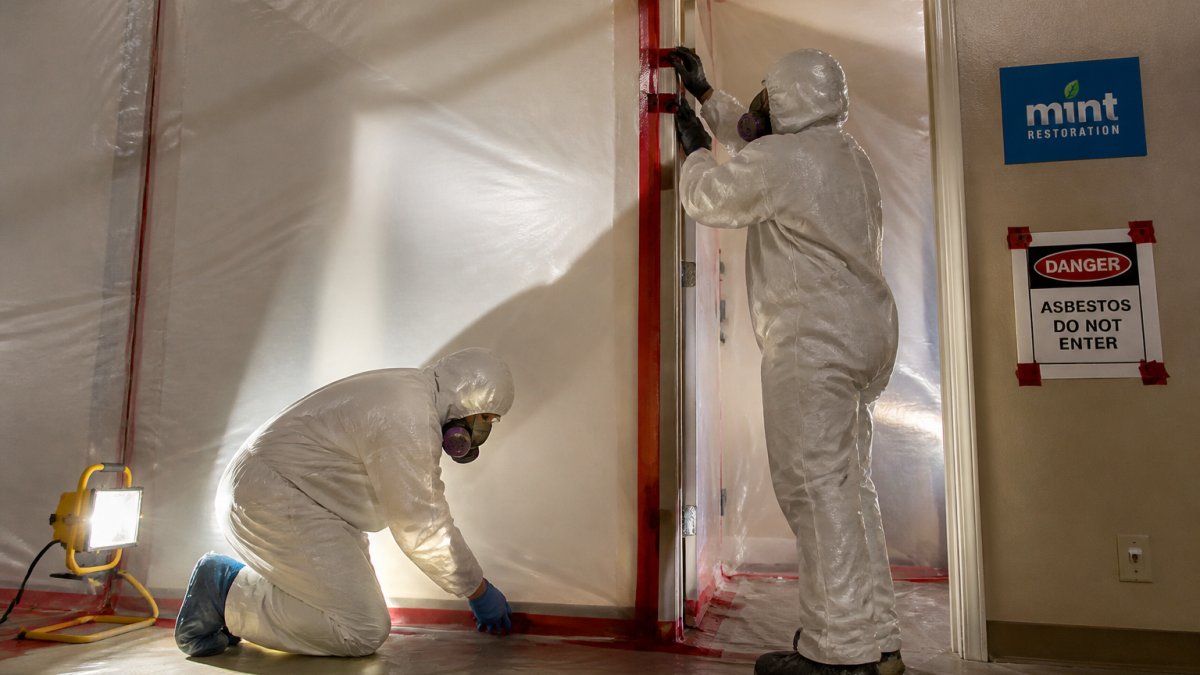
A real asbestos abatement safety plan covers three phases: containment, clearance, and closeout. Containment keeps fibers from spreading. Clearance proves the air is clean. Closeout gives you the documentation to prove it years later.
Containment: What Should Actually Be Built
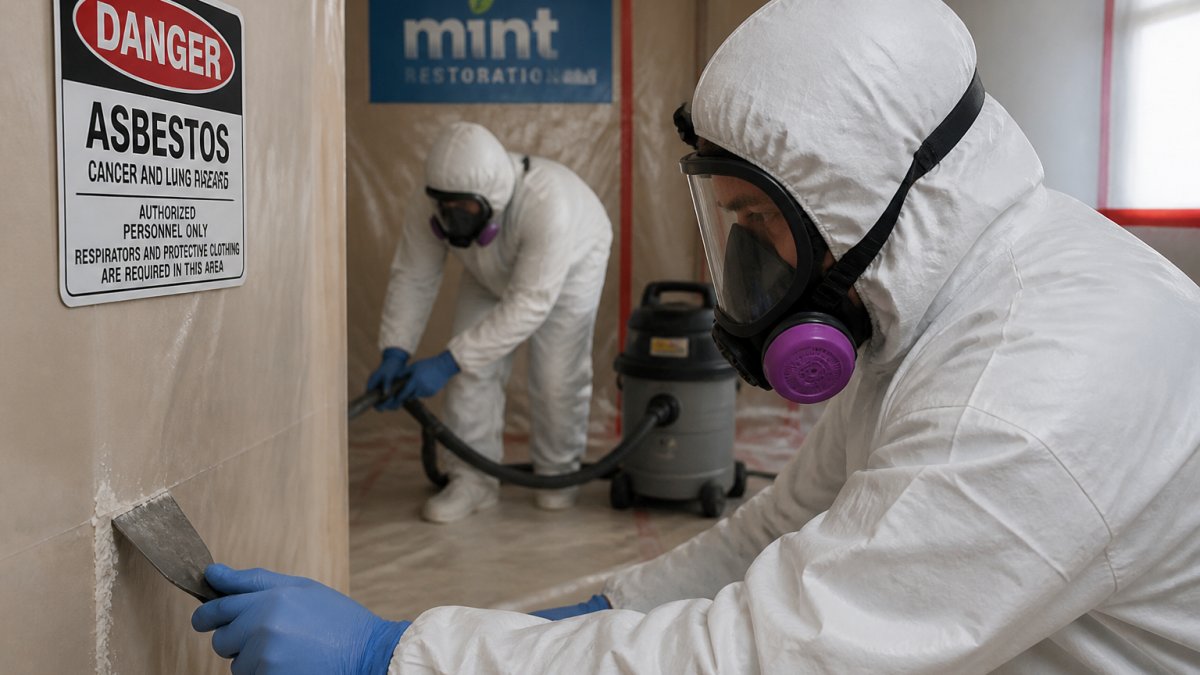
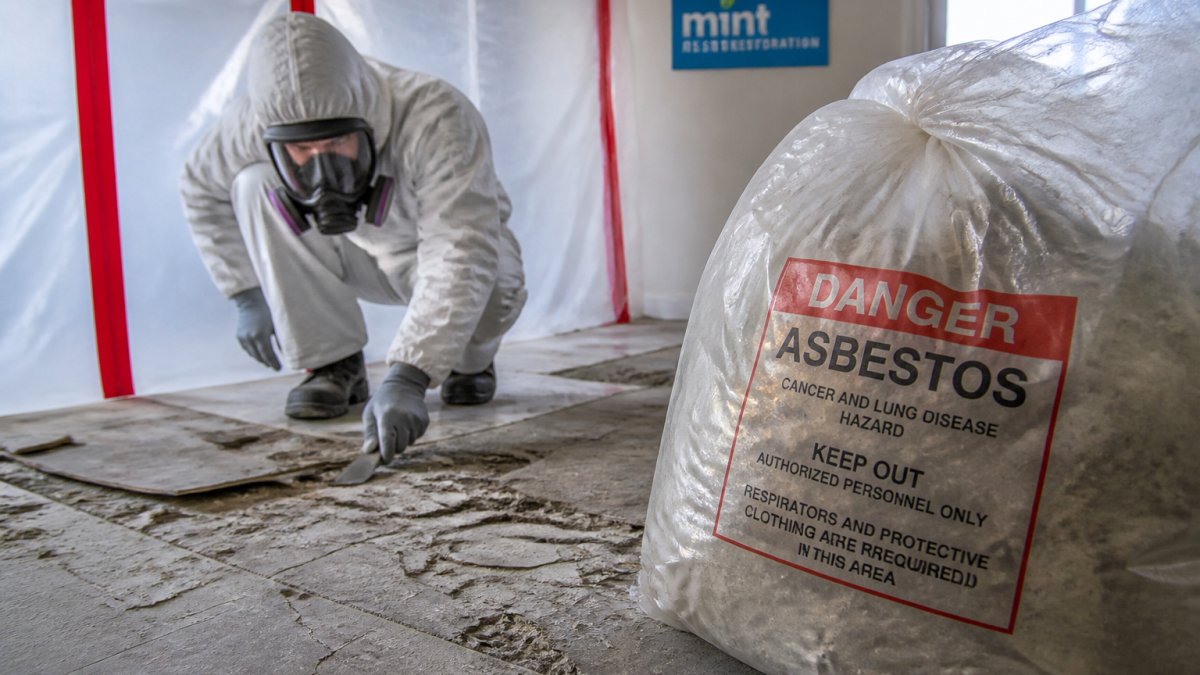
Containment is not one sheet of plastic over a doorway. A proper residential containment typically includes:
- Critical barriers sealing the work area from occupied space, with double layers of poly sheeting on floors and walls and sealed seams.
- Negative air pressure maintained by HEPA-filtered negative air machines, so air flows into the containment rather than out of it. Ask how many machines and how the contractor monitors pressure.
- HVAC isolation, supply and return vents sealed or the system shut down, so fibers cannot travel through ductwork.
Ask the contractor to describe this sequence for your specific project. If the answer is vague, the plan is vague.
Worker Protection and Air Monitoring
Workers should be in disposable protective clothing and fitted respirators, and the contractor should be able to explain its respiratory protection program. On the monitoring side, many projects include air sampling during abatement (often called personal or area monitoring) in addition to final clearance. Ask whether the contractor performs this and who analyzes the samples. A common pattern is that the same independent firm handles both monitoring and clearance, but confirm that in writing, because the person signing off should not be the person who did the removal.
Clearance Testing: The Step That Proves the Job
Clearance testing is an independent air sample taken after cleanup and before the containment comes down. The standard sequence is visual inspection first, then air sampling, then teardown only after results meet the applicable clearance criteria. Ask these questions:
- Who performs the clearance sampling, and are they independent of the removal crew?
- What clearance criterion will be used, and will you receive the laboratory report?
- What happens if the sample fails, who pays for re-cleaning and re-testing?
Get the answer to the last question in the contract. A contractor confident in its work will not hesitate to put re-clearance responsibility in writing.
Closeout Documentation: What to Keep
At closeout, you should receive a project report that includes the scope of work performed, waste disposal records (including the disposal site and manifest or shipping documents), and the clearance results. Keep these. They are your proof of safe handling if you ever sell, refinance, or file a claim.
Our demolition services often tie directly into abatement work when a project moves from removal to teardown.
Asbestos Removal Cost: Reading Bids and Spotting Suspicious Estimates
Asbestos removal cost depends on the amount of material, its condition, accessibility, and the containment required. Because pricing varies so widely by project, treat any contractor who quotes a firm number over the phone with caution. What matters is the written estimate, and how you read it.
What a Legitimate Bid Itemizes
A professional estimate breaks the job into lines you can compare across contractors. Expect to see, at minimum:
- Labor by crew size and estimated days
- Materials, poly sheeting, tape, respirators, disposable suits, HEPA filters
- Containment setup and teardown
If a bid collapses all of that into one lump sum, you cannot compare it to anything. Ask for the breakdown before you compare bottom numbers.
A Simple Bid-Comparison Framework
Put the bids side by side and score each on the same criteria:
- Scope match, does each bid cover the same areas and materials? A bid that excludes a closet, a crawlspace, or exterior siding is not cheaper; it is smaller.
- Clearance testing included? If one bid omits it, add the cost of an independent test before comparing.
- Disposal named? A bid that does not name the disposal site may be planning improper disposal.
- Containment specified? Look for machine counts, barrier description, and decontamination approach.
- Payment schedule, milestone-based payments are a sign of a professional operation; large upfront deposits are a warning.
Warning Signs in a Suspiciously Low Estimate
A bid that comes in dramatically below the others usually means something was left out. The most common omissions are clearance testing, proper disposal, and adequate containment. Other red flags:
- A firm price given before anyone has seen the material
- No written scope, or a scope that says "remove asbestos" without specifying areas
- No mention of permits or notifications
That gap does not disappear. It becomes your problem later, often as a failed clearance, a re-clean, or a disclosure issue at sale. Compare bids line by line, not just by the bottom number, and treat any bid you cannot itemize as a bid you cannot trust.
A Step-by-Step Contractor Vetting Checklist
Use this checklist before you sign anything. Print it, and do not skip lines.
- License number obtained and verified with the state licensing board
- Individual worker certifications requested and reviewed
- Certificate of insurance received and confirmed with the insurer
For a broader framework you can apply to any restoration hire, see our guide on how to choose a restoration contractor.
Requesting Your Abatement Estimate from Mint Restoration
Mint Restoration is a fully licensed, insured, and bonded general contractor with more than 30 years of experience handling asbestos and mold remediation for residential and commercial properties. Our IICRC, RIA, and ASCR certified technicians follow documented containment and closeout procedures, and every project carries a one-year warranty on all work.
We respond on site within 60 minutes and are available 24/7, including holidays. If you are ready to move forward, GET A QUOTE to discuss your project.
Frequently Asked Questions
What questions should I ask an asbestos removal contractor before hiring?
Ask for the contractor's license number and the state agency that issued it, then verify it yourself. Request a certificate of insurance showing general liability and workers' compensation coverage, and confirm the bond is current. Ask how many asbestos removal projects they have completed in the past year, whether their workers hold asbestos certification and specialized training, and what their containment and clearance testing process looks like. Get all of it in a written estimate with a defined scope of work, not a verbal promise.
How do I verify an asbestos contractor license and insurance?
Start with your state's contractor licensing board or environmental agency and search the license number directly rather than trusting a photocopy. Confirm the license is active, covers abatement work, and has no disciplinary actions. For insurance, ask for a certificate of insurance sent directly from the insurer or agent, and call the agent to confirm the policy is in force. Check that workers' compensation coverage exists, because an uninsured crew injured on your property can create liability for you as the homeowner.
What should an asbestos removal estimate include?
A written estimate should list the square footage and location of material to be removed, the abatement method, containment setup, worker protection, waste disposal and transport, and clearance testing with air sampling. It should state who performs the clearance test, since an independent party is preferable. Look for line items covering permits, disposal fees, and post-removal cleaning. If a bid is a single lump sum with no scope detail, ask for a breakdown before comparing asbestos removal cost against other quotes.
Can I stay in my home during asbestos abatement?
In most residential projects, occupants are asked to leave the work area and often the home during active abatement and clearance testing. Containment uses negative air pressure and plastic sheeting to keep fibers from spreading, and normal household movement can breach that barrier. Ask the contractor how long you need to be out and when clearance testing confirms it is safe to return. Plan for pets and anyone with respiratory conditions to be away for the full duration.
How much does asbestos testing or removal cost?
Pricing depends on the amount of material, its condition, accessibility, and local disposal requirements, so no responsible contractor quotes a number before an inspection. Sampling and lab testing are usually a separate line item from abatement. For asbestos removal cost, request a written estimate after an on-site assessment and compare scope, not just the total. A quote that is far below the others often excludes clearance testing, disposal fees, or proper containment.
The hardest part of asbestos removal is not the removal. It is knowing who to trust with it. Mint Restoration brings licensed, insured, and bonded credentials, certified technicians, and a one-year warranty to every abatement project. Get started with Mint Restoration and get a written estimate backed by documentation you can keep.