 ultimate-guide
What Should a Business Do After Commercial Water Damage?
Last Updated: October 30, 2026
Quick Summary
Shut off the water source and cut power to wet zones, then photograph all damage before anything is moved. Call your insurer and a restoration contractor within the first hour of commercial water damage, because remediation costs rise 50-100% for every 24 hours of delayed response.
- Extract standing water within the first 2-4 hours and begin structural drying within 24 hours.
- Act within 24-48 hours to prevent mold growth, per the EPA's response table for clean water.
- Category 3 black water losses typically require disposal of carpet, drywall, insulation, and ceiling tile.
- Do not authorize reconstruction until a final drying report shows material readings at the dry standard.
- A written recovery plan lists contacts, shutoff maps, a photographed asset inventory, and continuity steps.
Table of Contents
- What to Do in the First Hour of Commercial Water Damage
- Your Commercial Water Damage Emergency Response Checklist
- How Water Damage Assessment and Mitigation Work
- Commercial Building Water Damage Drying Time and Verification
- Filing a Commercial Water Damage Insurance Claim
- Building a Business Water Damage Recovery Plan
- Preventing Commercial Water Damage Before It Starts
- Get a Commercial Water Damage Assessment from Mint Restoration
- Frequently Asked Questions
What to Do in the First Hour of Commercial Water Damage
Water damage restoration is the process of stopping an active water source, extracting standing water, drying building materials to verified moisture levels, and documenting every step for insurance.
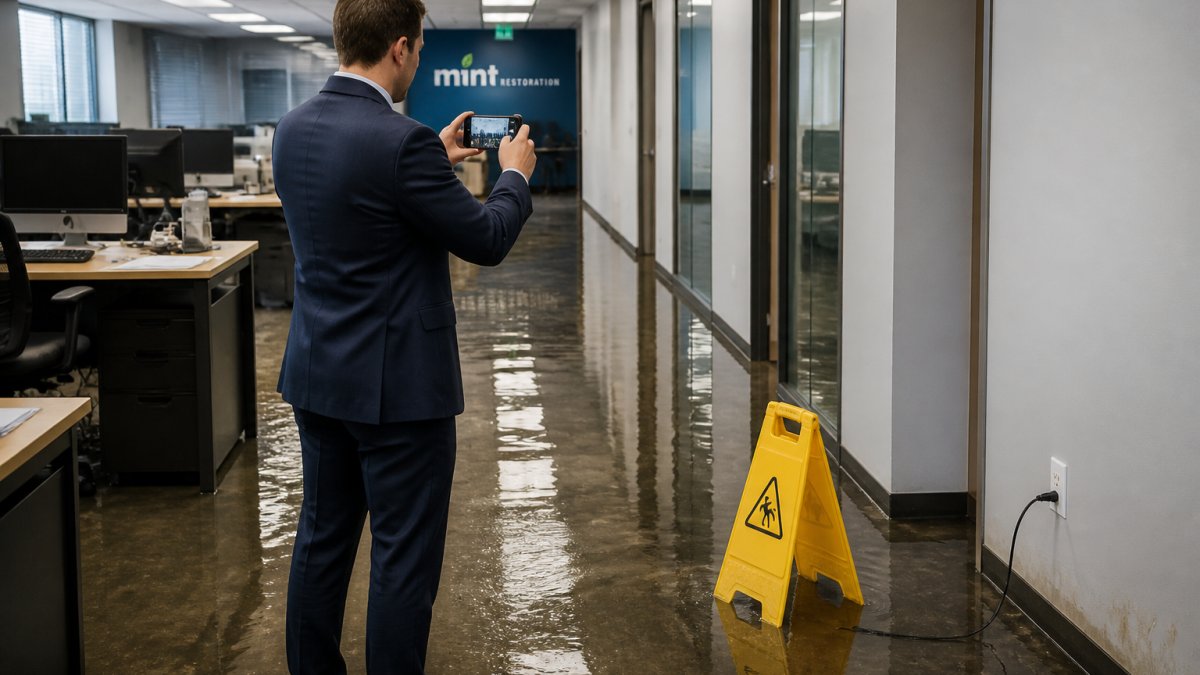
The math is unforgiving. Industry guidance cited in a 2026 commercial prevention guide puts remediation costs 50-100% higher for every 24 hours of delayed response.
Below, we walk through exactly what those decisions are, from shutting off the source to the phone call that starts professional mitigation.
Stop the Water Source and Make the Area Safe
Shut off the supply. Find the main shutoff valve, the riser serving the affected floor, or the sprinkler control valve, and close it before anything else.
Safety comes second only because you cannot stop water safely while it is still flowing. Once the source is closed:
- Kill power to any circuit near standing water at the breaker panel. Never wade into a flooded room with energized outlets.
- Photograph and note visible hazards, then give staff clear "do not enter" instructions, the approach commercial emergency guidance from TST recommends.
- Shut down HVAC serving wet zones so moisture does not spread through ductwork.
A common mistake is mopping before shutting off the source. You will lose that fight every time.
Document Everything Before You Move It
Photograph and video every affected area, damaged content, and piece of business equipment before a single item moves. Insurers weigh pre-mitigation evidence heavily, and adjusters routinely reduce payouts when documentation is thin.
Walk the space in a set order: ceiling to floor, room by room, wide shot then close-up. Capture inventory labels, serial numbers, and moisture staining on walls and ceilings.
Your Commercial Water Damage Emergency Response Checklist
Run this checklist in order. It compresses the first 24 hours into a sequence any facilities lead can follow without a restoration background.
| Step | Action | Timing |
|---|---|---|
| 1 | Shut off water source | Immediate |
| 2 | Cut power to wet zones | Immediate |
| 3 | Photograph and video all damage | First 30 minutes |
| 4 | Call your insurer and open a claim | First hour |
| 5 | Call a restoration contractor | First hour |
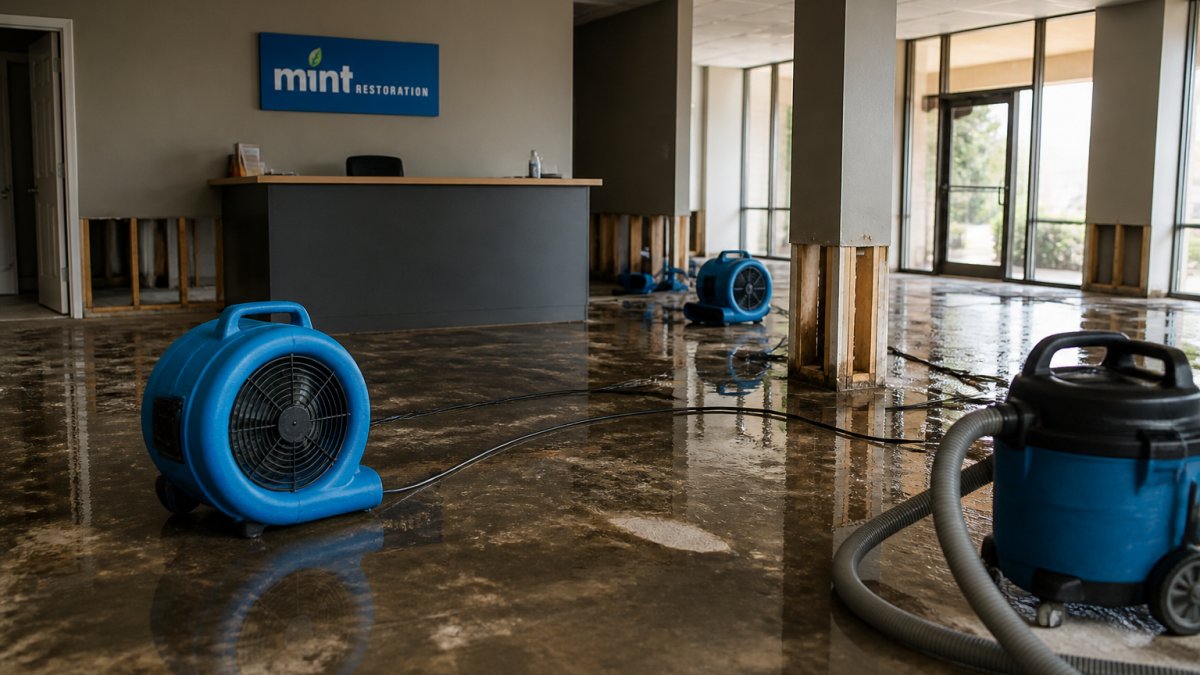
| 6 | Extract standing water | First 2-4 hours |
| 7 | Begin structural drying and monitoring | First 24 hours |
The EPA's response table for clean water damage frames the outer limit plainly: act within 24-48 hours to prevent mold growth. If you want to know how quickly a crew can realistically reach you, read our breakdown of emergency water damage response time expectations before you dial.
How Water Damage Assessment and Mitigation Work
Assessment is the inspection that classifies the loss, and mitigation is the work that stops it from getting worse. A qualified assessor maps the water's migration path, takes moisture readings in walls, ceilings, and subfloors, and identifies hidden intrusion behind fixtures, cabinetry, and wall assemblies.
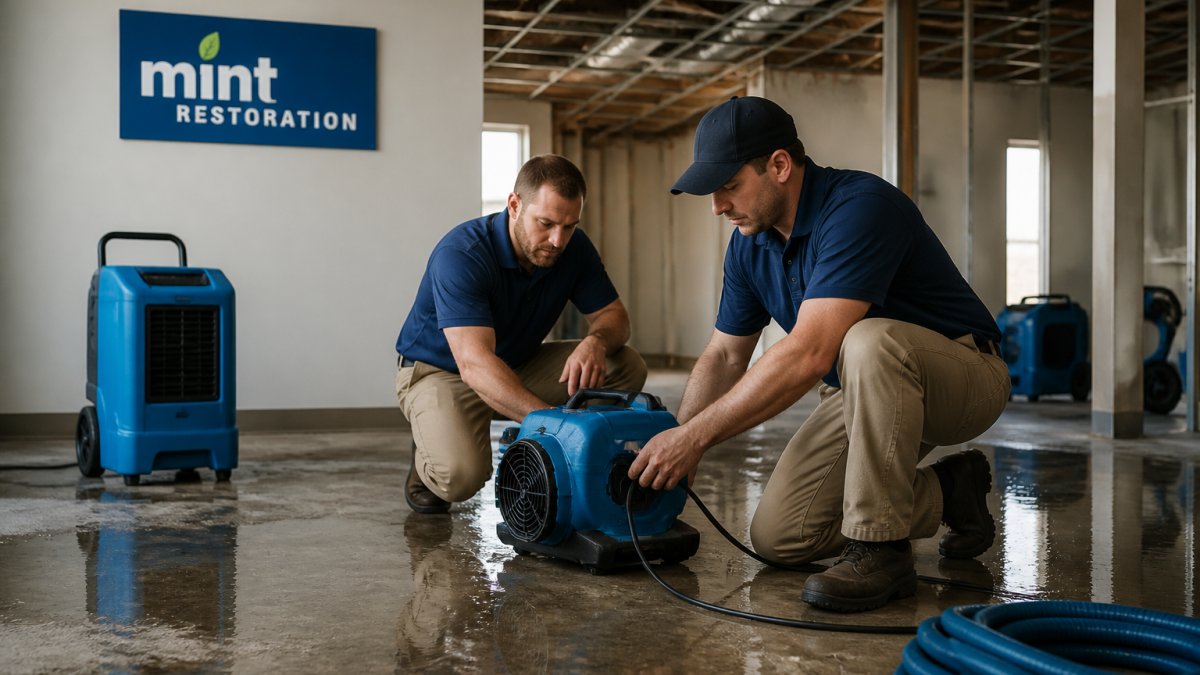
Mitigation follows the assessment in a fixed sequence: extraction, then structural drying, then dehumidification and humidity control with air movement from drying equipment. The IICRC S500 standard sets the procedures and precautions for both residential and commercial water damage restoration, and a contractor who works to it will log moisture readings at every visit and document the drying goal before equipment is placed.
Water Contamination Categories and Health Risks
Not all water is equal. The category assigned to a loss drives protective equipment, containment, disposal rules, and sometimes whether a material can be saved at all. The IICRC S500 framework most restoration contractors follow uses three categories:
- Category 1 (clean water): Water from a supply line, a broken domestic pipe, or a failed appliance feed. Low risk at the point of release, but it can degrade to Category 2 within about 48 hours if it sits in contact with building materials, carpet, or soil.
- Category 2 (gray water): Water from appliance discharge (dishwashers, washing machines), toilet overflow without solids, or a sump pump failure. It carries microorganisms and organic matter and requires PPE and careful disposal of porous materials it has soaked.
- Category 3 (black water): Water from sewage backups, ground-surface flooding, river or storm intrusion, or any water that has stood long enough to support bacterial growth. It is presumed to contain pathogens and requires full containment, respiratory and skin protection, and removal of porous materials that cannot be sanitized.
For commercial properties, the category determines more than cleanup method. Category 3 losses in a warehouse, retail floor, or food-service space typically require disposal of carpet, drywall, insulation, and ceiling tile rather than drying in place, and the affected area must be isolated from occupied zones until the contractor clears it. This is the step most in-house teams underestimate: a mop-and-fan response to a Category 3 loss can spread contamination into unaffected areas and turn a contained loss into a building-wide one.
Exposure precautions scale with the category. For Category 2 and 3 work, expect the crew to use gloves, eye protection, and respiratory protection, to establish negative air pressure or containment barriers where contamination could migrate, and to bag and dispose of porous materials per local solid-waste rules. If your building has occupants with compromised immune systems, young children, or food-service operations, the isolation requirements are stricter and should be written into the mitigation plan before work begins.
Commercial Building Water Damage Drying Time and Verification
The number that matters for drying is not the calendar but the moisture reading, which is only meaningful when compared against a dry standard taken from an unaffected area of the same building.
How Drying Is Measured
A professional drying plan rests on three measurements, taken at every monitoring visit:
- Moisture content in materials: Pin-type or pinless meters read the percentage of moisture in drywall, wood framing, and subfloor. Readings are compared to a baseline from a dry, unaffected wall or floor in the same building, not to a generic chart.
- Relative humidity and temperature in the air: Hygrometers track the air's moisture load so the contractor can confirm dehumidifiers are keeping up with what the drying equipment is releasing from materials.
- Vapor pressure and dew point: These readings tell the contractor whether the air is dry enough to keep pulling moisture out of materials or whether the equipment mix needs to change.
A contractor working to the IICRC S500 standard will record these readings daily, note equipment placement and run hours, and keep a drying log that shows the trend line from wet to dry. That log is the evidence an adjuster uses to approve the drying portion of a claim, and it is the record that protects you if a material fails later and someone asks whether it was dry before reconstruction.
What "Dry" Actually Means Before Reconstruction
Drying is complete when material readings match the dry standard from an unaffected area, not when the surface feels dry to the touch. Surface dryness is misleading: drywall paper can read dry while the gypsum core and the framing behind it are still holding moisture. Rebuilding over a wall cavity that is still wet traps moisture, and mold can colonize that cavity within days.
If drying stalls, the cause is usually one of four things: an undiscovered water source still feeding the assembly, insufficient air movement in a closed cavity, equipment sized for a smaller loss, or a building envelope that is letting humid outside air back in. A contractor who monitors daily will catch the stall and adjust the equipment mix rather than letting the clock run. When readings plateau and mold has already begun, we walk clients through how to handle mold in walls before any reconstruction starts.
Commercial Factors That Change the Timeline
Several conditions push drying past the standard window on commercial properties:
- Dense assemblies: Concrete slab, plaster, and masonry hold water far longer than drywall and require extended drying or specialized equipment.
- Large open floor plates: Warehouses and retail floors have more surface area and air volume, so equipment counts and dehumidification capacity scale up.
- Building systems in the wet zone: HVAC ductwork, electrical raceways, and elevator pits can trap moisture and require isolation or specialized drying before the space is safe to reoccupy.
Filing a Commercial Water Damage Insurance Claim
A commercial water damage insurance claim moves faster when your documentation is complete and your contractor speaks the adjuster's language. Report the loss immediately, provide your photo and video evidence, and keep a mitigation log recording equipment usage, drying days, and moisture readings.
Commercial policies vary, so the timeline in your documentation matters. Before you commit to a contractor for claim work, use our guide to vetting a restoration contractor to confirm licensing and insurance.
Building a Business Water Damage Recovery Plan
A business water damage recovery plan is a written document that assigns roles, lists shutoff locations, and sets a call order before anything floods. Build it in four parts:
- Contacts: insurer, restoration contractor, plumber, electrician, key staff.
- Shutoffs: labeled map of water, gas, and electrical panels.
- Inventory: photographed asset list with estimated values, updated annually.
- Continuity: alternate workspace, critical systems list, and a reopening sequence.
Loss mitigation is cheaper than recovery. A plan that gets extraction started two hours sooner can cut both downtime and claim size.
Preventing Commercial Water Damage Before It Starts
Prevention comes down to inspection rhythm. Check roof drains and flashing before storm season, exercise supply valves quarterly, and watch the building systems most prone to failure: water heaters, supply lines behind break rooms, irrigation lines, and HVAC condensate pans.
Warehouse and multi-tenant properties carry extra risk from shared risers and tenant improvements. Photo documentation of pre-loss conditions protects you when a neighbor's pipe leak becomes your claim.
Get a Commercial Water Damage Assessment from Mint Restoration
Mint Restoration is a fully licensed, insured, and bonded general contractor with over 30 years of industry experience. Our IICRC and RIA certified technicians are available 24/7, with a 60-minute on-site response time, and we back our work with a one-year warranty.
If you need the repair work itself, our team handles water and flood damage repair from emergency extraction through reconstruction. For a deeper walkthrough of the full recovery sequence, read our steps for commercial disaster recovery.
Frequently Asked Questions
What should a business do first after commercial water damage?
Stop the water source if it is safe to do so, then cut power to affected areas and keep staff out. Photograph and video the damage before moving anything, and call a restoration company. The EPA's clean-water guidance is built around the 24- to 48-hour window before mold growth begins, so the first call should go to a restoration crew without delay. Document equipment, inventory, and damaged contents for the insurance claim as you go.
How long does commercial building water damage drying time usually take?
Commercial drying timelines depend on the materials involved. Drywall, carpet, and ceiling tiles release water faster than concrete slabs or dense hardwood. Technicians take moisture readings daily and compare them against dry standards, adjusting air movement and dehumidification until the readings hold. Do not accept a fixed timeline before the assessment; ask for documented moisture readings instead.
Can a business stay open during water damage restoration?
Often yes, if the damage is contained to one zone. Restoration crews can set up containment barriers, negative air pressure, and separate entrances so the rest of the building keeps operating. If the water source was contaminated or the electrical system was affected, part or all of the building may need to close temporarily. A business water damage recovery plan should identify which functions can run from a backup location and which cannot.
What should businesses document for a commercial water damage insurance claim?
Photograph and video every affected area before cleanup, including standing water, damaged contents, business equipment, and inventory. Keep mitigation logs that record equipment usage, moisture readings, and drying progress. Save receipts for emergency repairs and any temporary relocation costs. Give your adjuster the restoration company's scope of work and photo documentation so the property damage and business interruption portions of the claim are supported.
How can businesses prevent mold after water damage?
Mold prevention comes down to speed and moisture control. Extract standing water within hours, then run air movers and dehumidifiers until structural materials test dry. The EPA's guidance for clean water damage sets the mold risk window at 24 to 48 hours, so waiting a few days to start drying is the most common mistake. After drying, keep humidity control in place and re-check any area that stayed wet longest.
When should a business hire a professional water damage restoration company?
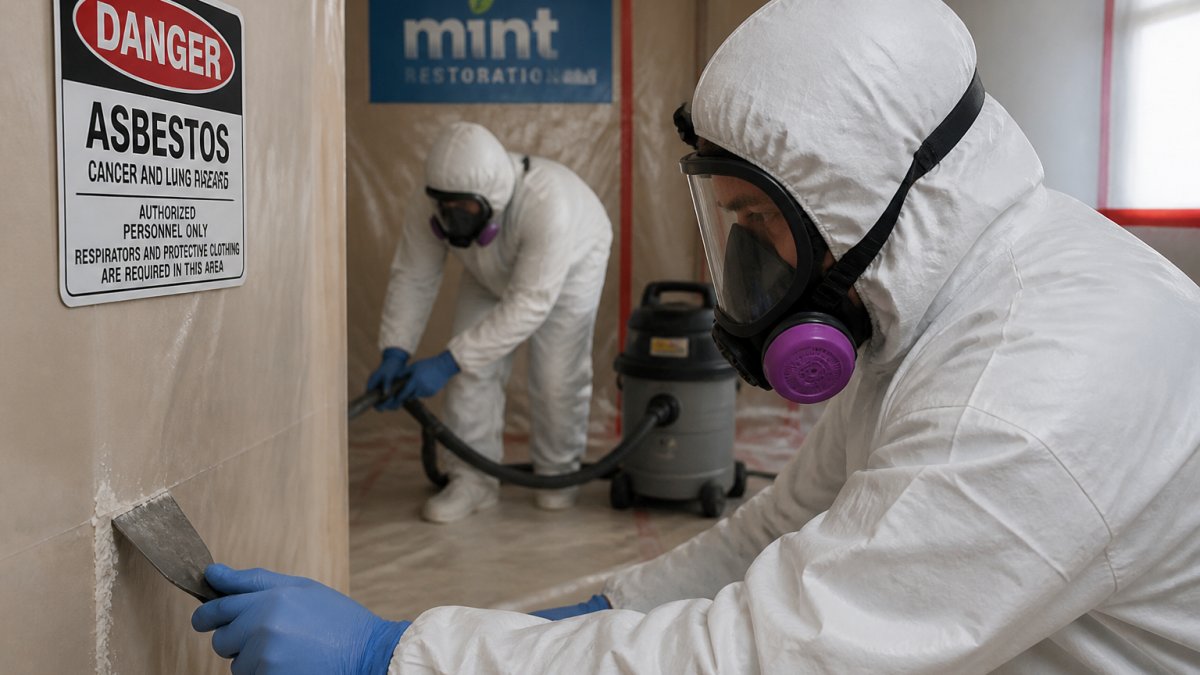
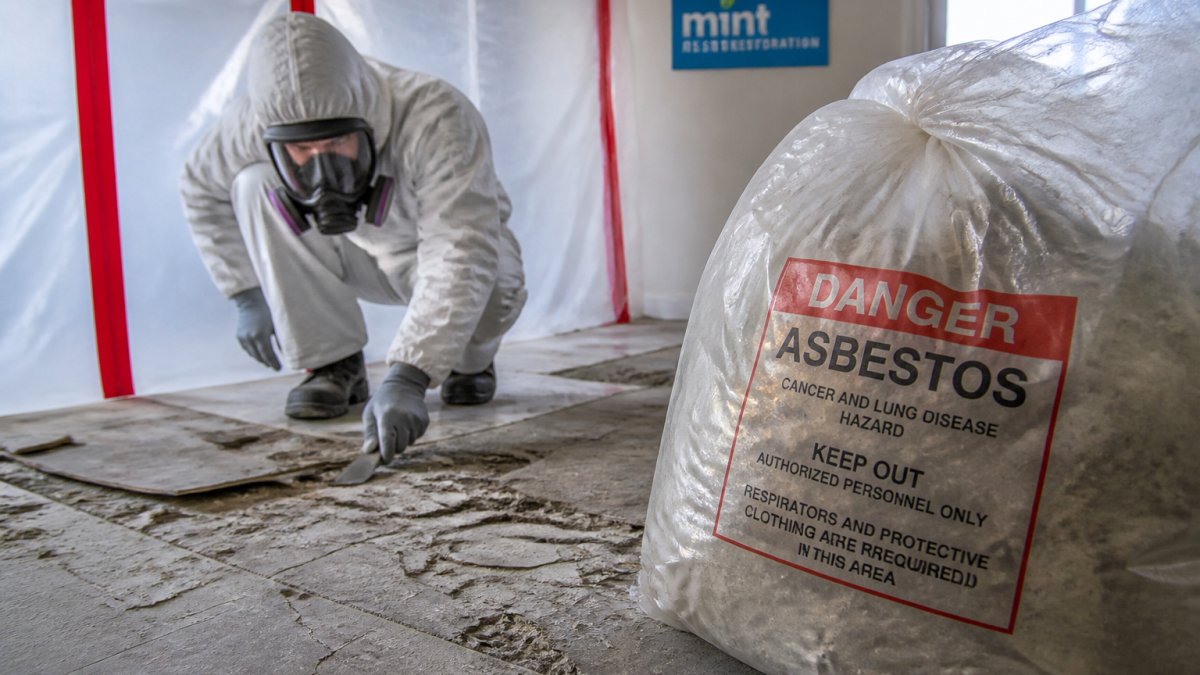
Call a professional as soon as water has reached building materials, not just the floor surface. Extraction equipment, dehumidification capacity, and moisture meters are needed to dry a commercial building properly, and insurance claims move faster with documented mitigation logs. If the water is contaminated, or the building has asbestos or other hazardous materials, professional handling is required. Mint Restoration offers 24/7 emergency response with a 60-minute on-site target.
Flooding in a commercial building rarely waits for business hours, and every hour of standing water raises your remediation cost. Mint Restoration brings 24/7 availability, a 60-minute on-site response target, and certified technicians who document the loss while they stop it. Get started with Mint Restoration and get your property dried, verified, and back to pre-disaster condition.