 ultimate-guide
How Do You Hire a Licensed Asbestos Abatement Contractor?
Last Updated: October 28, 2026
Quick Summary
To hire a licensed asbestos abatement contractor, request the license number in writing and confirm it directly with the issuing state agency, then verify the supervisor's individual certification, current worker training, and insurance with the carrier. Treat the license as a minimum standard and check for violations, suspensions, and coverage of your specific work type.
- Ask for the certified supervisor's credentials, not just the company license.
- Confirm insurance and bonding directly with the carrier, not a certificate alone.
- Require itemized estimates covering labor, materials, disposal, and clearance testing.
- Keep the inspector, abatement contractor, and clearance tester as separate parties.
- Insist on independent clearance testing before containment comes down.
Table of Contents
- Why Hiring a Licensed Asbestos Abatement Contractor Matters
- Asbestos Contractor License Verification: A Step-by-Step Check
- The Asbestos Removal Process: What a Compliant Job Looks Like
- How to Read an Asbestos Abatement Estimate
- Questions to Ask an Asbestos Contractor Before You Sign
- Red Flags and Bid Comparison: Spotting Trouble Early
- Requesting Your Asbestos Abatement Quote
- Frequently Asked Questions
Why Hiring a Licensed Asbestos Abatement Contractor Matters
Hiring a licensed asbestos abatement contractor is the single most important decision you will make once a building survey confirms asbestos is present. Asbestos is a known human carcinogen, and the EPA's asbestos guidance for building owners is clear that disturbing it without proper controls releases fibers that can cause serious long-term illness.
Here is the uncomfortable truth most guides skip: a license is a floor, not a ceiling. It proves a company met the minimum requirements to operate, not that your crew is trained, that insurance covers abatement work, or that the containment will hold.
Asbestos Contractor License Verification: A Step-by-Step Check
- Request the contractor's license number in writing and confirm it directly with the issuing agency.
- Ask for the individual certification of the supervisor who will run your job, not just the company license.
- Verify that workers have current asbestos training documentation.
- Check the license status for any history of violations or suspensions.
- Confirm the license covers the type of work you need, whether removal, encapsulation, or demolition.
What to Confirm With Your State and Local Agencies
For more on the trust question, see our guide on hiring asbestos removal contractors safely.
Insurance, Bonding, and Liability Checks
The New Hampshire Department of Environmental Services guidance on hiring abatement contractors recommends that you independently inquire about the level and type of insurance a contractor carries before hiring, rather than relying on a list or a referral alone.
Watch out: a certificate of insurance can be expired or cancelled the day after it is issued. Verify directly with the carrier, and confirm the policy names abatement work specifically.
The Asbestos Removal Process: What a Compliant Job Looks Like
A compliant asbestos removal process follows a fixed sequence: inspection and survey, a written work plan, containment, removal, waste disposal, and clearance verification. For a closer look at commercial asbestos removal services in Yuma, see our detailed guide. Skipping or compressing any step is the clearest sign a contractor plans to cut corners. If you are also dealing with hazardous materials, you may need professional bio cleanup in Yuma. The difference between contractors who follow that sequence and those who only say they do comes down to regulatory mechanisms you can ask about by name.
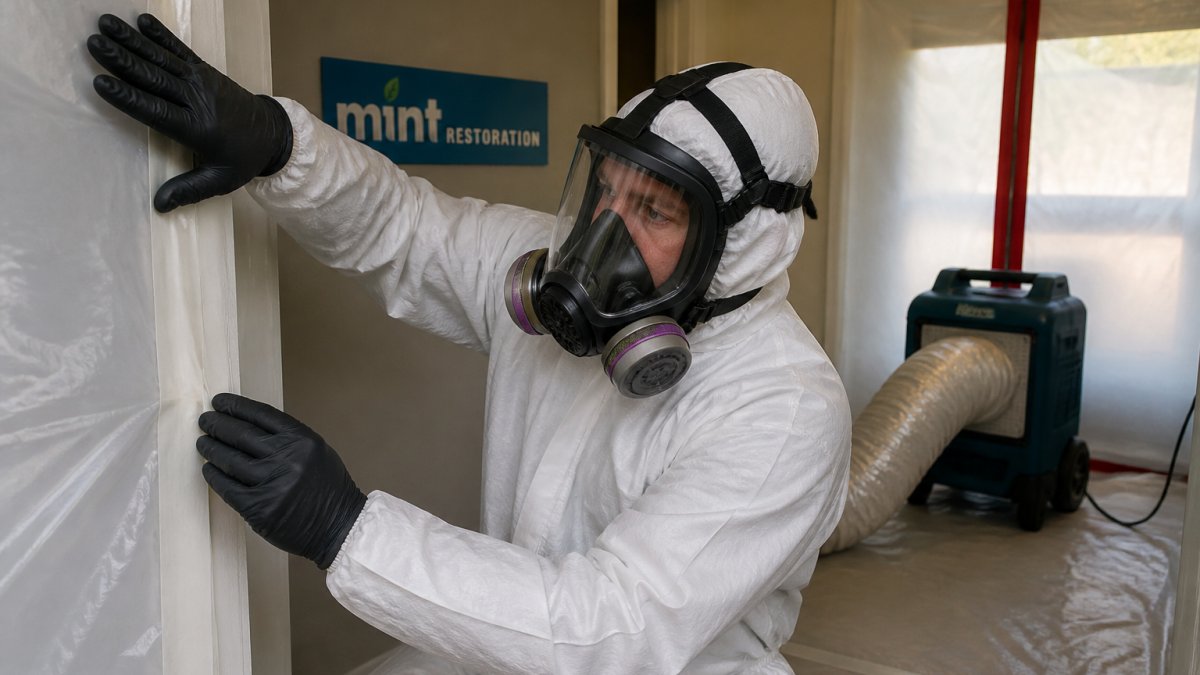
The Regulatory Backbone You Should Recognize
- OSHA worker-protection standards (29 CFR 1926.1101 for construction, 29 CFR 1910.1001 for general industry). These govern exposure limits, respirator use, protective clothing, decontamination, and training. Workers fall into distinct training categories, Class I through Class IV, based on the work they perform, and the supervisor on a Class I or II job must hold specific training. Ask which class your job falls under and who is the trained supervisor.
- EPA NESHAP (40 CFR Part 61, Subpart M). This is the regulation that requires a thorough inspection before demolition or renovation, and it sets work-practice standards for a regulated asbestos-containing material. It also requires written notification to the delegated state or local air agency before certain demolition and renovation work begins. A contractor who cannot tell you whether notification was filed, or who says it is not needed without checking, is a problem.
- State and local asbestos programs. Many states run their own abatement licensing, project notification, and clearance-testing rules on top of the federal floor. The state program is usually where your contractor's license and your project's permit live.
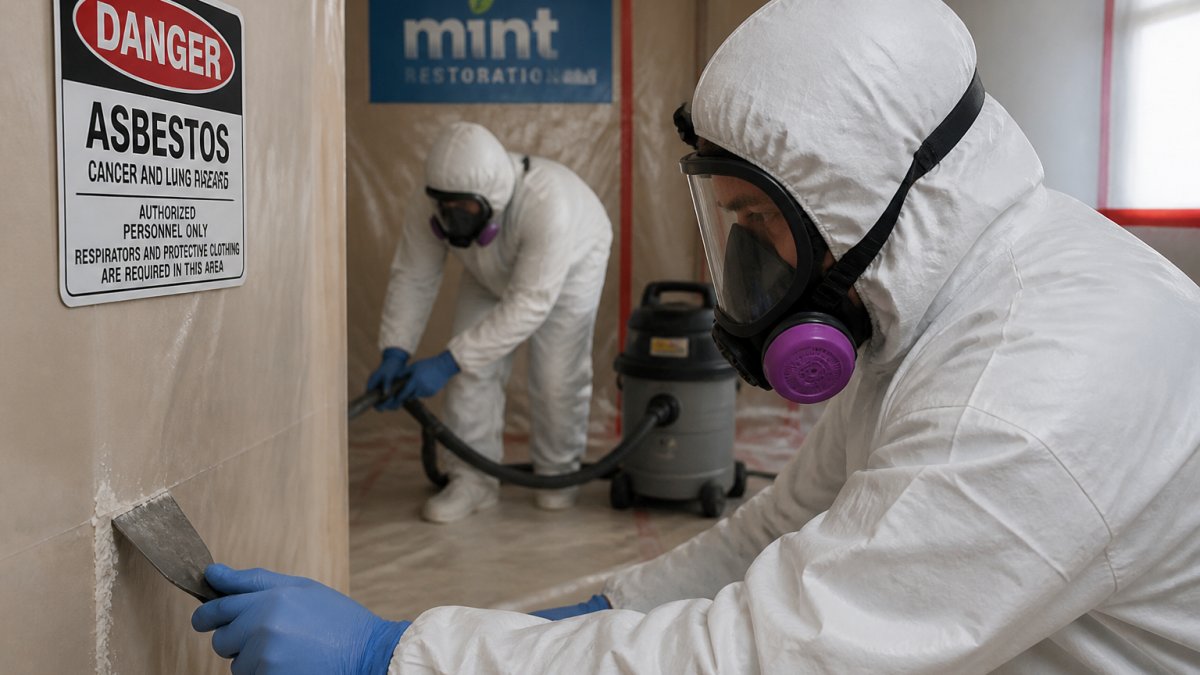
What Containment and Air Monitoring Actually Involve
Air monitoring is how you know the containment held. Expect:
- Personal monitoring of workers to confirm exposures stay under the OSHA permissible exposure limit.
- Area or clearance monitoring after removal and cleaning, performed before the containment comes down.
- Independent clearance testing, ideally by a firm that does not work for the abatement contractor, using the criteria your state or the project specification requires.
Waste Handling and the Paper Trail
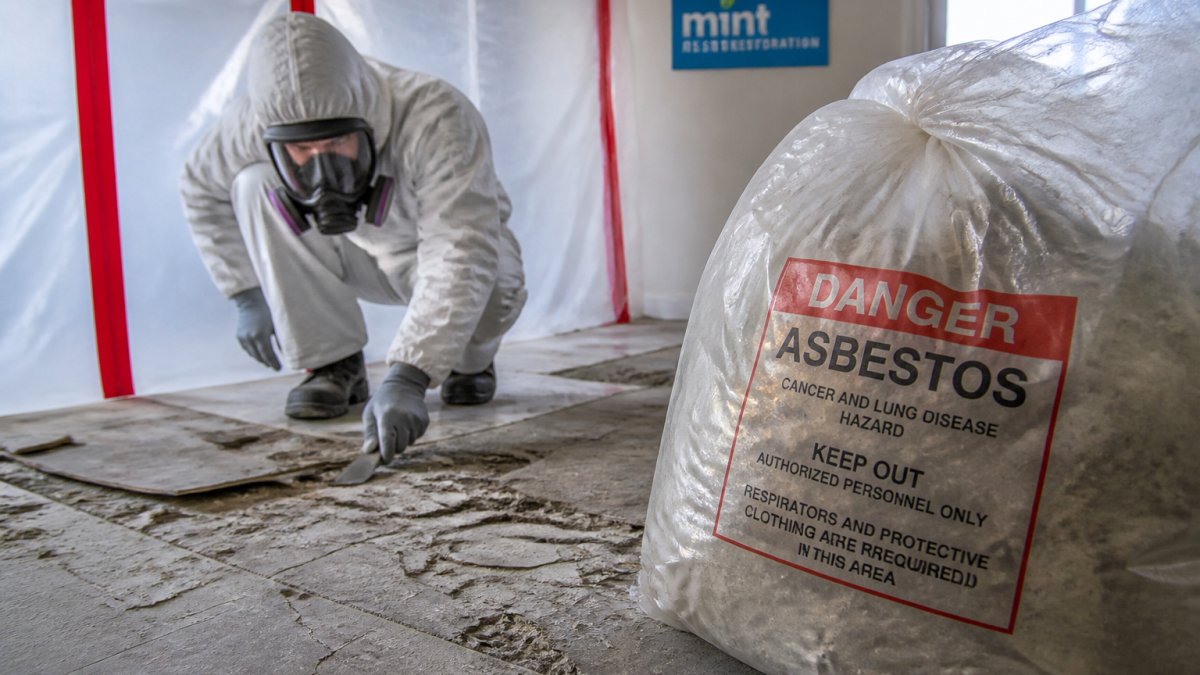
Regulated asbestos waste must be wetted, bagged or wrapped in leak-tight containers, labeled with the required warning, and transported under DOT and EPA rules to an approved disposal site. The facility issues a waste shipment record or manifest that belongs in your project file. Ask in writing who signs the manifest, which facility receives the waste, and whether you will get copies. A contractor who cannot answer those three questions is not managing the waste stream.
The Separation-of-Roles Rule
The EPA recommends hiring the inspector and the abatement contractor separately, according to Mesothelioma.com's summary of EPA recommendations. That separation protects you, because the company removing the material should not be the one deciding whether it needs to be removed, and the company doing the removal should not be the one certifying that the space is clear. Keep the inspector, the abatement contractor, and the clearance tester as three distinct parties wherever your state rules allow it.
How to Read an Asbestos Abatement Estimate
An asbestos abatement estimate should itemize labor, materials, disposal, and clearance testing as separate lines, not bundle them into one lump figure. If you cannot see what you are paying for, you cannot compare bids fairly, and the harder skill is knowing which lines a low bidder quietly removed.
The Line Items a Complete Estimate Includes
If any of those lines is missing, ask why before you compare totals. A bid that omits disposal or clearance testing is not cheaper, it is incomplete.
What Actually Drives the Cost
We do not publish fixed prices because every project differs, but a reputable contractor will explain each line and what would change the total. Ask directly: "What would make this number go up, and by roughly how much?" A contractor who can answer has actually scoped your job.
How to Compare Bids Fairly
Put the bids side by side against the same documented scope, then compare four things in order: scope completeness, credentials and insurance, disposal and clearance handling, and only then price. The lowest bid is often lowest because it dropped independent clearance testing, excluded disposal fees, or assumed less material than the survey found.
Contract Terms and Closeout Documents
Watch out: a bid that is dramatically lower than the others usually means one of three things, missing disposal fees, no independent clearance testing, or uninsured labor. Ask which line was cut, and get the answer in writing before you sign.
Questions to Ask an Asbestos Contractor Before You Sign
- Who is the certified supervisor on my job, and can I see their certification?
- Can you provide the certificate of insurance and bonding directly from the carrier?
- How do you handle waste disposal, and will I receive the manifests?
- Who performs the final clearance testing, and are they independent of your company?
- What is your process if asbestos is found in an area the survey missed?
- Will the building stay occupied, and how will you protect the rest of it?
- What does your warranty cover, and for how long?
Best for: owners who want a documented paper trail from survey to clearance. Skip if: you are only comparing verbal promises, which are worth nothing when something goes wrong. For a broader set of vetting steps, see our restoration contractor selection guide.
Red Flags and Bid Comparison: Spotting Trouble Early
| Red flag | What it signals | What to do |
|---|---|---|
| No license number provided | Unlicensed or lapsed | Verify with the state agency before proceeding |
| Insurance certificate only, no carrier confirmation | Coverage may be invalid | Call the insurer directly |
| One lump-sum price, no line items | Hidden exclusions | Request an itemized estimate |
| No independent clearance testing | Cost being cut | Insist on third-party testing |
| Pressure to sign immediately | Sales tactic, not service | Walk away and get another bid |
| No written contract or warranty | No accountability | Require both in writing |
Requesting Your Asbestos Abatement Quote
At Mint Restoration, we are a fully licensed, insured, and bonded general contractor with over 30 years of experience handling asbestos and mold remediation across residential and commercial properties. Book a call now with our building restoration experts to secure your spot. We respond on site within 60 minutes, operate 24/7 including holidays, and back our work with a one-year warranty. Our technicians hold IICRC, RIA, and ASCR certifications.
Frequently Asked Questions
How do I verify an asbestos abatement contractor's license?
Ask for the license number and then confirm it directly with the state or local agency that issues abatement credentials, rather than relying on a contractor list alone. The New Hampshire Department of Environmental Services recommends independently inquiring about the level and type of insurance carried before hiring. Cross-check the business name, license status, and expiration date, and ask whether the firm holds a general contractor license in addition to abatement certification.
What insurance should an asbestos abatement contractor carry?
Look for general liability, workers' compensation, and pollution or environmental liability coverage, and request a certificate of insurance naming you or your property as additionally insured. Call the insurer to confirm the policy is active. The New Hampshire Department of Environmental Services advises checking both the level and the type of insurance, since a policy that covers general construction may exclude hazardous materials work entirely.
How much does professional asbestos abatement cost?
Pricing depends on the square footage affected, the material type, access difficulty, containment requirements, and disposal fees, so a written estimate after an on-site inspection is the only reliable figure. Avoid any contractor who quotes a firm price over the phone without seeing the site. For a project-specific asbestos abatement estimate, request a quote from a licensed firm that itemizes labor, materials, disposal, and clearance testing.
Can I stay in my home during asbestos removal?
In most cases you should plan to leave while containment is up and work is underway, particularly when friable material is being disturbed. Ask the contractor how they will seal the work area, run negative air pressure, and verify cleanliness before you return. A compliant asbestos removal process ends with clearance testing, and you should receive the results in writing before reoccupying the space.
What should an asbestos abatement contract include?
The contract should name the licensed contractor, describe the scope and square footage, list containment and disposal methods, state the clearance testing protocol, and set a payment schedule tied to milestones rather than a large upfront deposit. Confirm that permits, notifications to regulators, and disposal manifests are the contractor's responsibility. Get the start date, completion estimate, and warranty terms in writing.
Should the inspector and the abatement contractor be the same company?
The U.S. Environmental Protection Agency recommends hiring an asbestos inspector and an abatement contractor separately, according to guidance reported by Mesothelioma.com. Keeping the two roles independent prevents a conflict of interest where the same firm both identifies the problem and profits from the removal. If your contractor offers both, ask how they separate the inspection findings from the sales process.
The hardest part of asbestos abatement is not the removal itself. It is knowing whether the company in front of you will do it safely and stand behind the work. Get the license verified, the insurance confirmed, and the scope documented before anyone touches the building. Get started with Mint Restoration and move from uncertainty to a compliant, warrantied remediation.